Monotype Pneumatics: Quadding and Centering actuators

The Quadding and Centering system on the Monotype composition caster is controlled by two actuators on the paper tower.

The one for Quadding is a simple piston inside the tower housing which causes the motion of the paper tower cam to rotate a notched counting wheel; only when the counting wheel has advanced 5 (or 10) positions (to the next notch) is the paper ribbon allowed to advance. As a result the character coded on the ribbon is repeated 5 (or 10) times. The choice of 5 or 10 is controlled by rotating part of the notched counter wheel, thus closing up half its notches.

The one for Centering is a rocker arm outside the tower housing which is tilted one way to initiate centering by preventing paper ribbon advance, and is tilted back to its normal position when a sensor on the galley detects that the line is full. It is also forced to its normal position when both Quadding and Centering are coded on the same ribbon line (which IMHO is a keyboarding error).

Both of these receive their pneumatic signals via a manifold in the mounting plate of the Unit Shift valve, and these control signals originate in another valve (to be detailed later) mounted on the rear apron of the caster table.

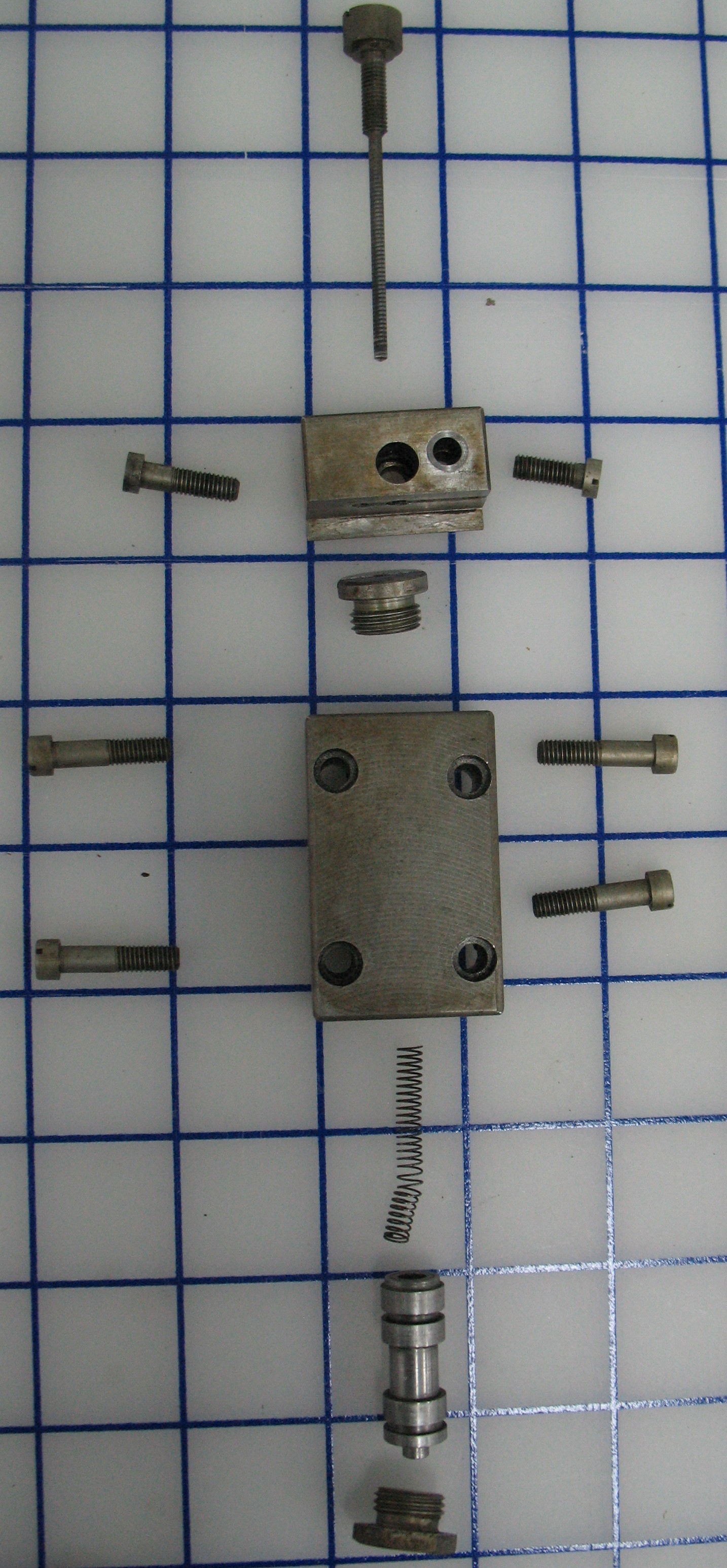
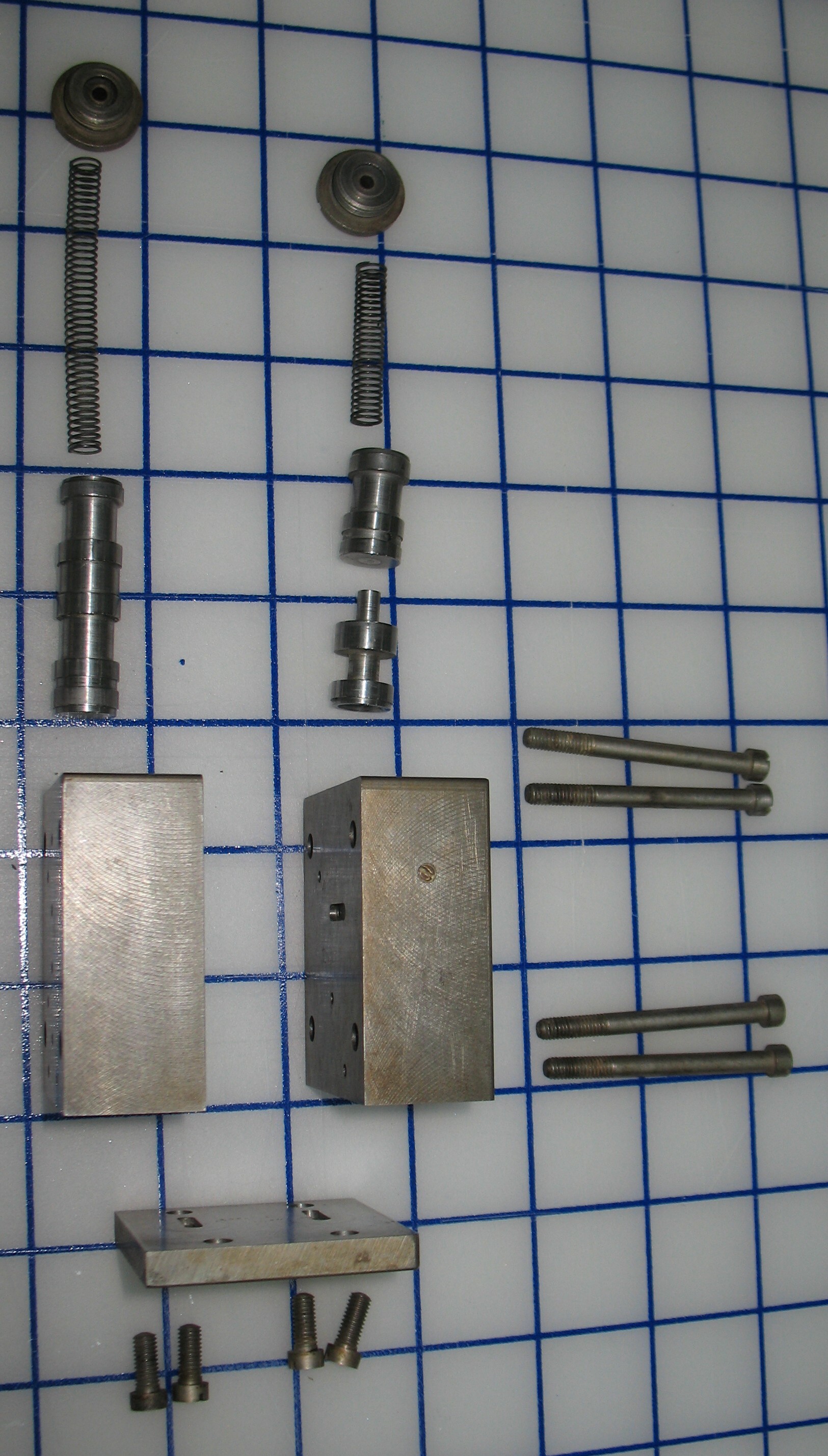
The Centering actuator contains quite a few parts with a bit of clever pneumatics involved:

Centering Actuator Disassembled

The clever part is the reset piston (which returns the rocker arm to its normal position). Firstly, it is a double piston, so it can either be actuated by the line-full signal from the galley or by the redundant selection of both Quadding and Centering on the same ribbon position. Each of these signals has its own isolated cavity in the cylinder, and either one will raise the upper piston and push the rocker arm to its normal position. Secondly, by using a larger diameter piston for the reset piston, the air pressure that rocks the arm when starting centering is able to be overcome by the reset piston actuated by the same pressure.

It should be noted that the two mounting screws (the long ones above and below the pistons) are not the same length (and are shown in the wrong positions in the above photo). The longer screw penetrates into the inside of the paper tower housing and acts as a mounting screw for the Quadding actuator as well.

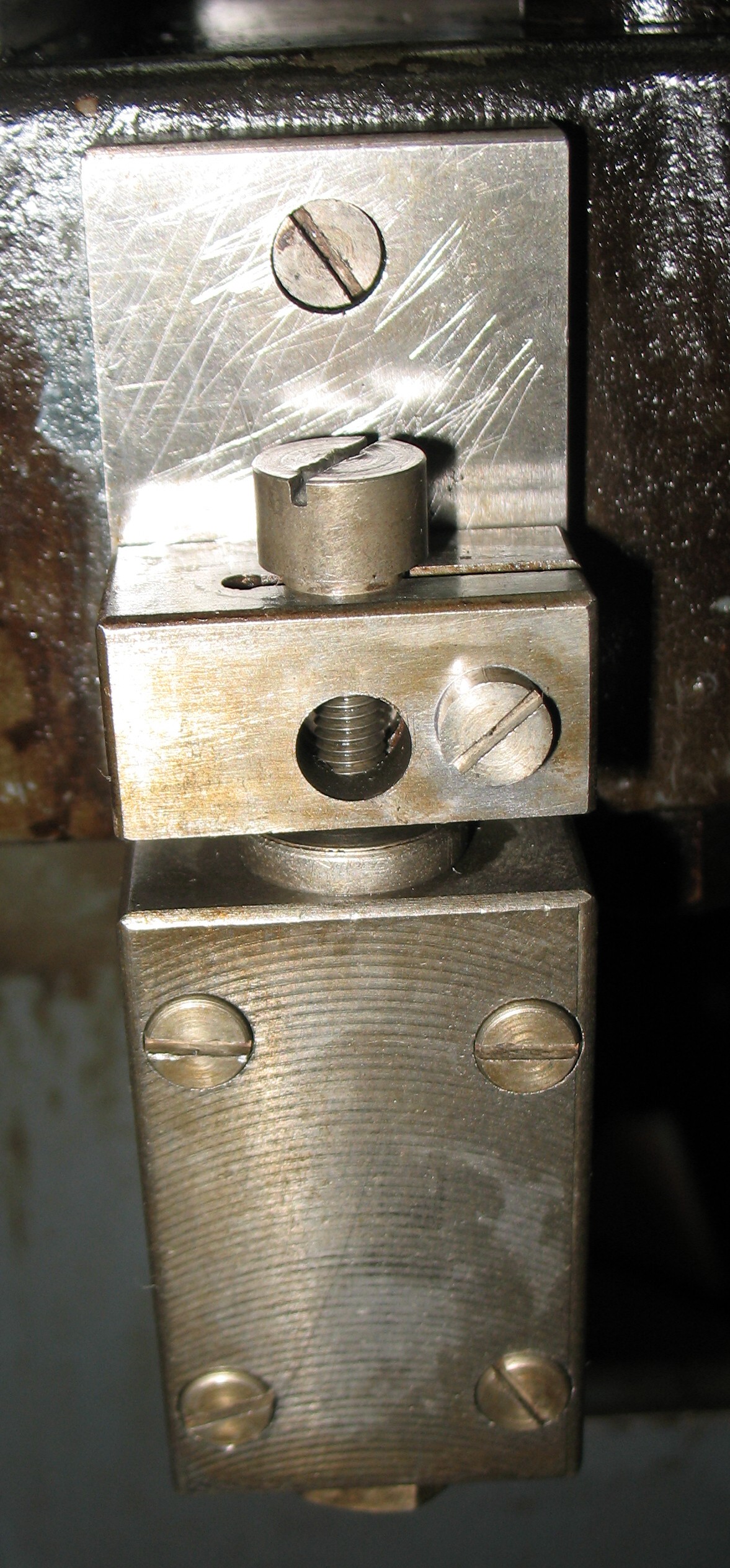
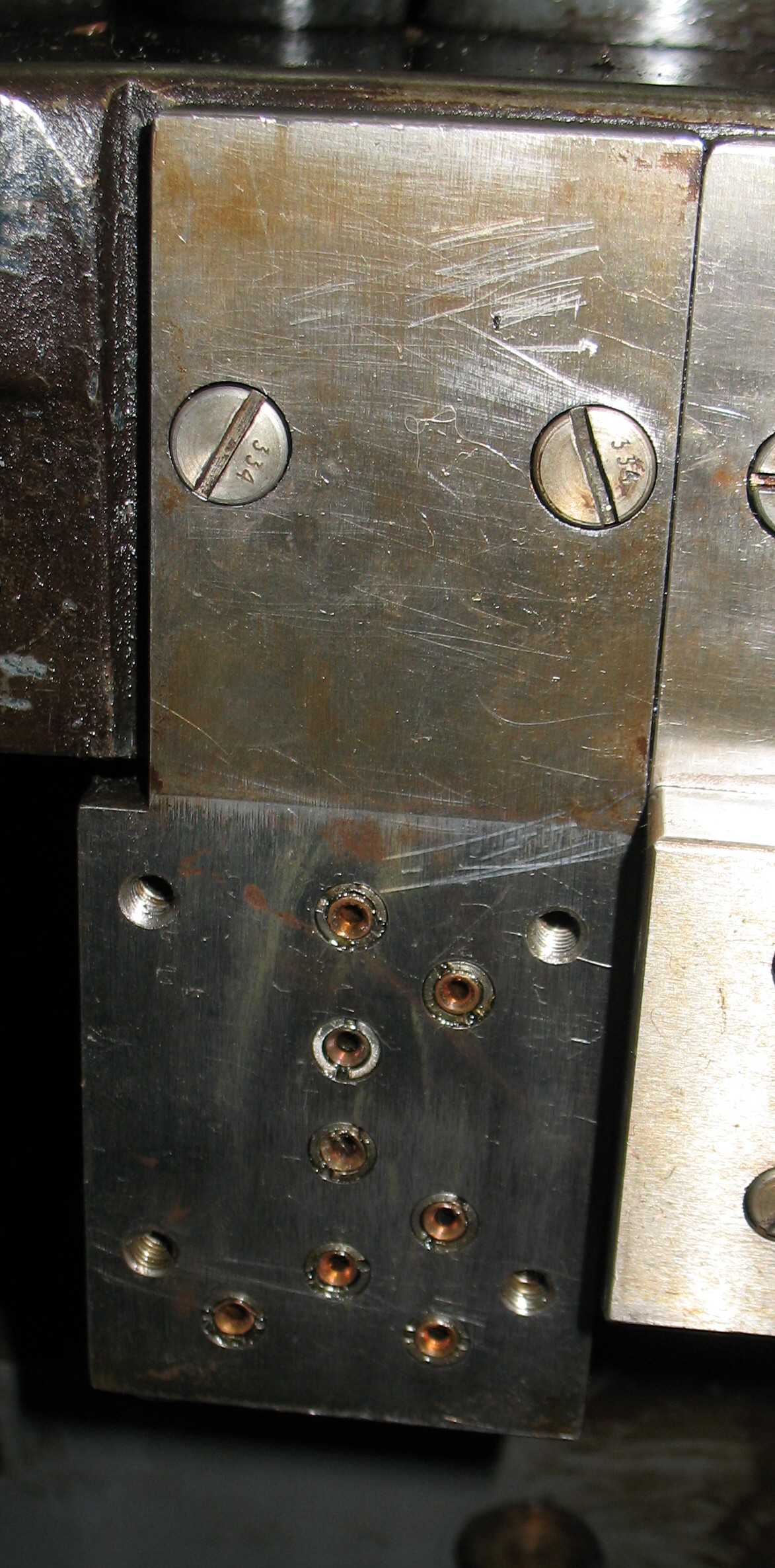
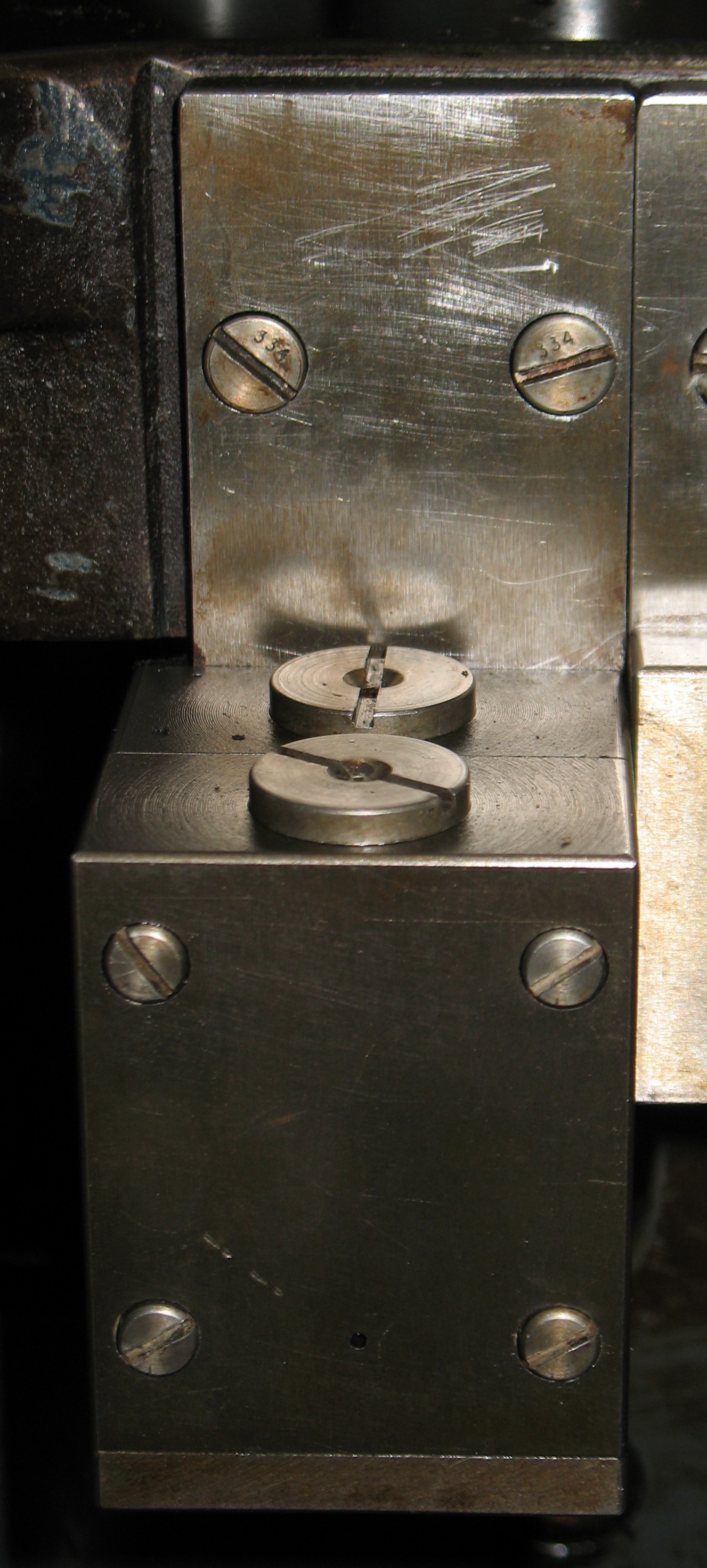
The centering actuator was reassembled and installed on the side of the paper tower facing the operator just below the notched Quadding counting wheel:

Centering Actuator Assembled Centering Actuator Installed

The second photo is taken looking obliquely downward between the paper tower and the centering pin arm from the left side of the machine.

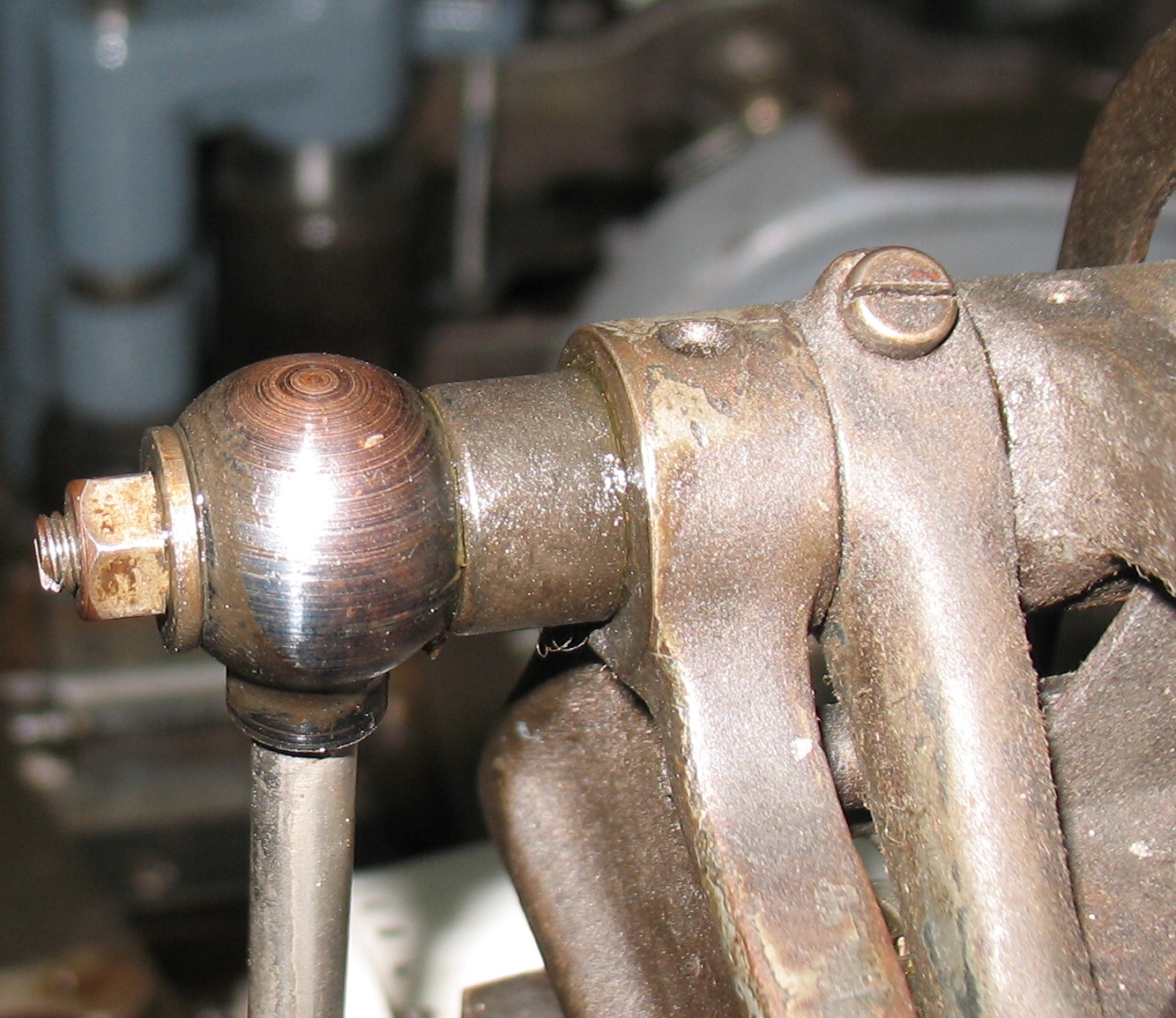
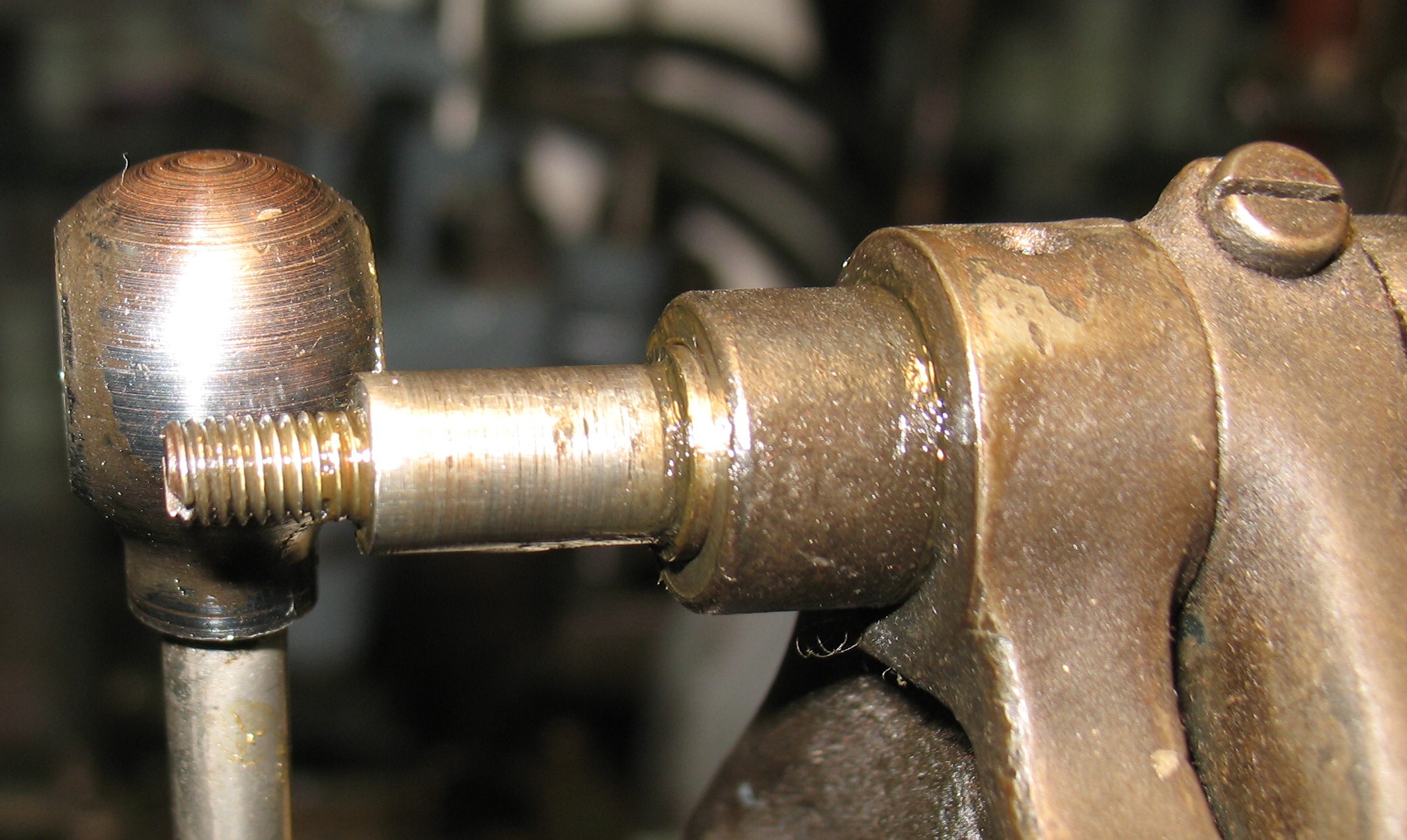
The Quadding actuator is installed inside the paper tower and all the air lines connect to the manifold in the Unit Shift Valve mounting plate:

Quadding Actuator Quadding and Centering piping

The Centering actuator is also visible in the first photo.

The next pneumatic parts to clean are the dummy valve and mounting plate for Unit Adding, and I might also correct the messy repair job on one of the related air lines.

Monotype Pneumatics: Unit Shift Valve completed

The last task left for Unit Shift was to install (what I call) the buffer valve. I use this term because its purpose is to store the Unit Shift selection (on or off) from the end of the ribbon read (just after the pin jaws close) until the time when the matcase is positioned (just as the matrix jaws close).

Unit Shift Valves With Arrows

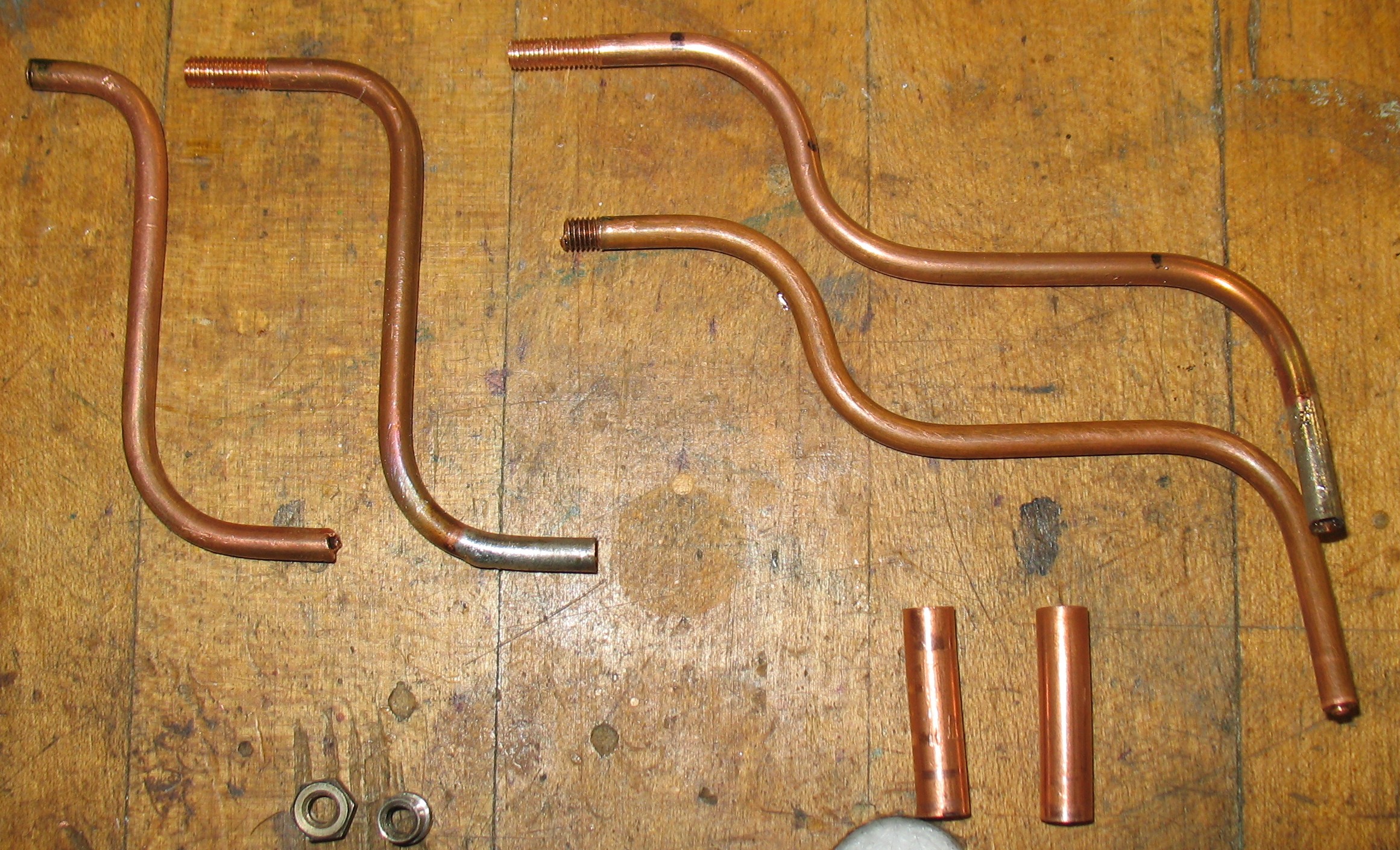
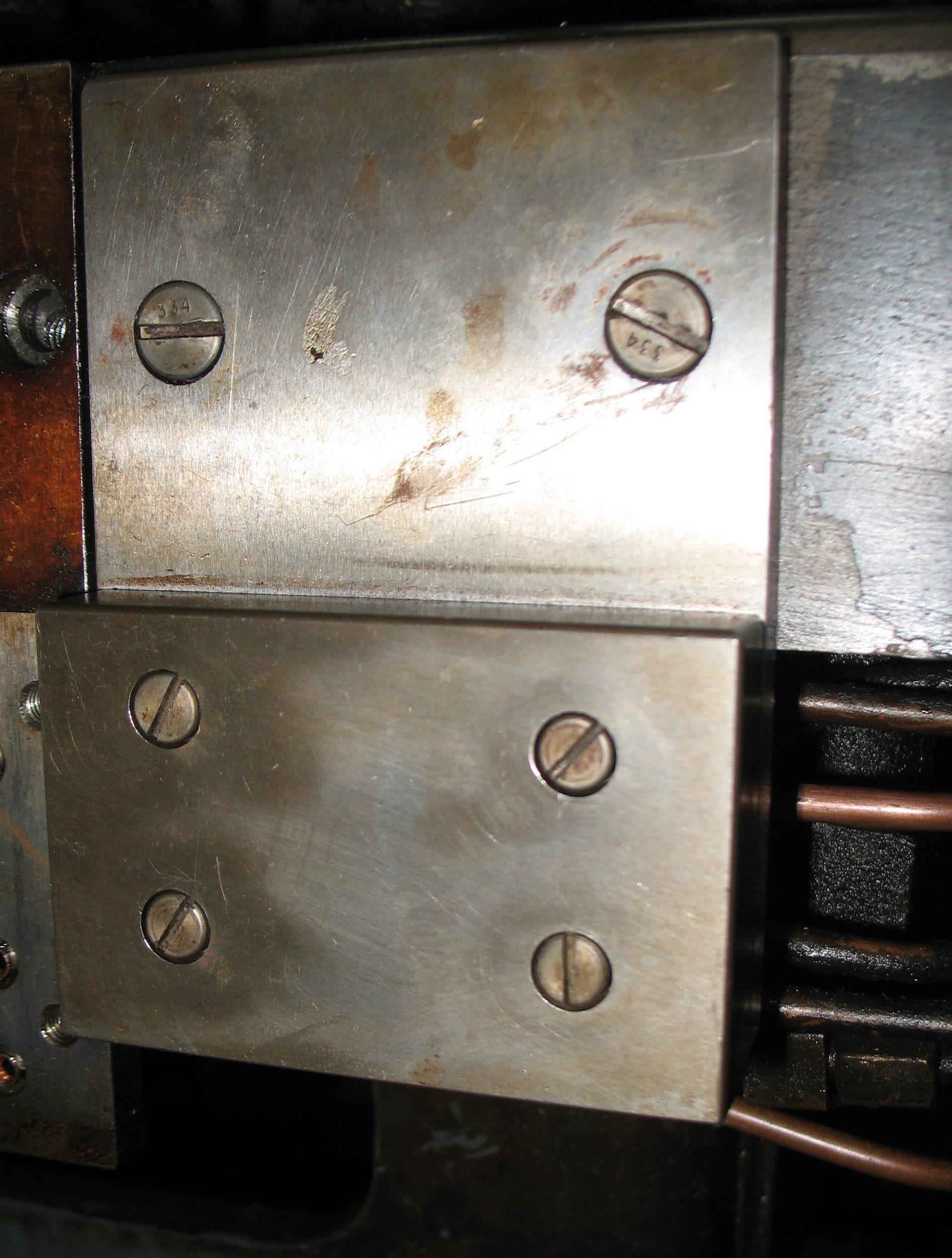
The buffer valve is in the right foreground, connected to the Unit Shift valve by three copper tubes. If you want to remove any of this (for instance to adjust the stroke length on the jaws) by far the easiest way is to remove the Unit Shift valve, its buffer valve, bracket and tubing all at once. This is done by removing the two bolts and four screws marked by red arrows (one of the screws is hidden by one of the pipe fittings).  All the parts then come off as a unit, connected by the tubing.

The next task is to reinstall the Quadding and Centering actuators on the paper tower.

Schopper-Riegler Freeness Tester for sale

This is the third piece of papermaking laboratory equipment I have for sale. Per ISO standard 5267-1, this tests the “freeness” of the pulp, which can be thought of as the amount of water which is “free” and will drain quickly from the fibres. As pulp is beaten (for instance in a Hollander beater) its freeness decreases. This instrument is one of two commonly used to test for pulp freeness, the other being a Canadian Standard Freeness (CSF) tester. There are tables to convert between S-R freeness and CSF freeness.

Both testers run on similar principles: A known amount of pulp is released to drain through a screen, and the drain water is directed to a funnel which has one hole at the bottom which allows a known flow rate, and another side hole to catch any water that drains from the pulp in excess of that rate. The volume of water from the side hole is measured to give an indication of how much of the water in the pulp is free to drain quickly.

SR TesterUnfortunately this tester is in storage and I have no photos of it, but it is essentially the same as the one illustrated here. There is a weight in the larger vertical tube at the back, and a cord leading to the pulley and crank at the top. When a catch is released, the weight drops, lifting the bar and allowing the pulp in the upper chamber to reach the screen. By using a weight like this the test is not affected by the manner in which the operator releases the pulp. To give you an idea of the overall size, the tester is about 1m tall, and the upper cylinder holds 1L of pulp.

The tester for sale is complete and suitable as is to obtain qualitative results but would require calibration for quantitative results that could be sensibly compared with the results from other S-R testers.

We are asking $1000 for this unit.

Monotype Pneumatics: Unit Shift valve reinstallation

In my next task of getting the paper tower operational on my Monotype composition caster, I have started cleaning and lubricating the various pneumatic control valves. The first one I did is a combination of the Unit Shift control valve and a manifold for the Quadding and Centering unit, located on the left table apron below the paper tower. After removing the valve body and its mounting plate I was left with a mess of pipe connections:

Unit Shift Valve piping

Unfortunately the pipes have some spring to them and shifted out of position once the valve base was removed. Removing this base required a specially modified cabinet-tip screwdriver to remove the retaining nuts for the pipes.

I disassembled the valve and base and cleaned all the parts with solvent and a brush:

Unit Shift valve parts

Those little rings near the upper left are the retaining nuts for the pipes. I reassembled the valve using a light oil, and got to work on reinstalling the base plate. This job was made difficult by the shifted positions of the pipes as there is not enough room to reach behind the plate and put them in their holes individually. Furthermore, the mould blade cam lever prevents the plate from dropping into place from more than about an inch away. I put short lengths of wire into each pipe, which allowed me to guide each into its own hole. Inn retrospect though I should have chosen wire that was a closer fit to the inside diameter of the pipe, and also stiffer than the soft iron stove wire I actually used. This would have made it easier to coax each pipe into its proper hole just by shifting the wire.

Unit Shift base plate reinstallation

This shows the base plate in position with some of the pipes secured, and others with the positioning wires still in place. This photo and the next were lit by my work light which was below the valve area, hence the spooky upside-down shadowing. Once I had all the pipes secured I could re-mount the valve body; I cleaned the mating surfaces, applied a heavy oil, and screwed the valve onto the mounting plate.

20130924IMG_6488

The control knob now moves freely allowing Unit Shift to be turned on and off easily. The other buffer valve, which connects to the three flare fittings on the front, still remains to be installed.

The next valve and base plate I will clean is the one for Unit Adding, which is not installed on my caster, so instead of the valve there is a dummy plate mounted on the base plate which routes all the air lines as if Unit Adding were turned off.

Heart & Hand Festival

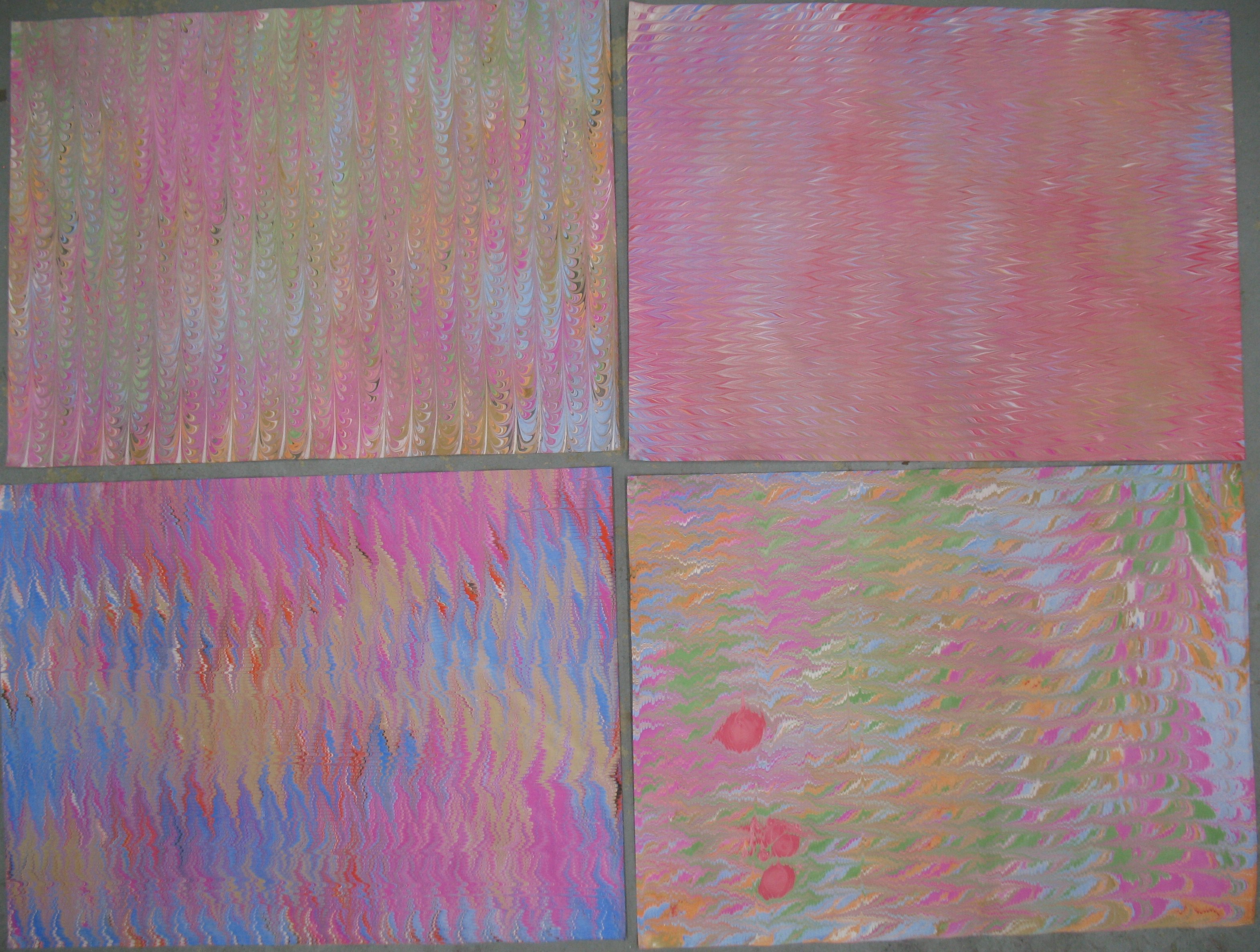
We spent today demonstrating paper marbling at the Heart & Hand Festival at Joseph Schneider Haus, and the item featuring us (and our resident cricket) on the festival’s blog just went up yesterday.

We were fortunate to have an indoor location for this because it rained all day and the outdoor exhibitors had to put up with some leaky canopies and cool breezes, although the blacksmith didn’t seem to mind much. Other than getting us a bit wet when loading in, the only effect the rain had on us was that power outages the night before forced me to mix up my marbling size the morning of the event. Because the size is mixed hot, it was still warm when I started marbling, causing some problems with the paint flow for the first three or four sheets of marbling. Once the size had cooled fully, everything went smoothly.

Despite the poor weather and some competing events we felt we had a good turnout. I have about 20 more pieces of marbling (using a palette of greens and blue) to add to our stock, and we passed out plenty of flyers for our upcoming Rural Routes Studio Tour. We left the marbling on site to dry and will be picking it up tomorrow.

Gurley paper permeability (porosity) tester for sale

Another commercial paper mill laboratory instrument we are putting up for sale is a Gurley Tester, which measures the porosity or permeability of a sheet of paper by trying to blow air through it as defined in TAPPI test T460. The operator measures how much time it takes for a specific volume of air to pass through the sheet.

Gurley tester Gurley tester closeup

This is an older model where the operator must turn a capstan to clamp the paper sample between two plates; newer models employ a lever and weight to provide consistent clamping force.

All parts are include, and most appear to be nickel-plated brass and could stand a good polish to remove the copper corrosion, but the unit should still be fully operational once cleaned up.

We are asking $500 for this tester.


Laboratory Handsheet Former for sale

We bought this handsheet former several years ago as part of a lot of commercial papermaking laboratory equipment and it is time we tried to sell it. This unit is for making standardized test sheets following TAPPI (The American Pulp and Paper Institute) procedure T205 “Forming handsheets for physical tests of pulp.”

TAPPI Sheetformer Bottom TAPPI Sheetformer Top

Unfortunately I don’t have a photo of it set up for use but a drawing can be seen as Figure 2 in the above reference. The near end of the pipe/valve seen on the right side of the second photo attaches to the drain of the cylindrical tank, which can be seen on the right side of the first photo, and the whole assembly stands upright with the base of the cylinder on a stand (not included) over a drain sump. The cylinder can be unlatched at its base and tipped open to reveal a removable round screen, on which the sheet is formed. The sheet formed is 158.8mm diameter. A trough around the base of the cylinder catches spilled water and sends it down the gray plastic drain pipe visible in the first photo.

To use it, the unit is filled with water to a certain level in the cylinder, also filling the long drain pipe. A specific amount of pulp is added to the cylinder and stirred a specific number of times using the included dasher (which is then removed). Pushing down on the lever opens a valve at the foot of the tall drain pipe, and the water spills from the bottom of the pipe; the height of the column of water generates a considerable suction, drawing the pulp against the screen to form a sheet. The idea is the emulate the suction applied to the mould screen (“wire”) in papermaking machines.

The cylinder is again unclamped and tipped open, the screen is removed and the sheet is couched off onto standardized absorbent blotters and placed in  a standardized press to press out the water, thence to a (what else?) standardized drying stack. The finished sheet is cut up into pieces destined for a suite of other standardized tests.

TAPPI Sheetformer accessories

Parts and Accessories

There are a few accessories included:

  • 6 mould screens, some dirty, some like new, both brass and stainless steel
  • Several pieces of both the coarse and fine screen to rebuild the mould screens
  • A stack of standard blotters
  • Couching and Pressing plates
  • The dasher for mixing the pulp in the cylinder
  • A cross-shaped baffle to inhibit vortex formation in the drain chamber

We are asking $1000 for the sheet former and accessories, HST and shipping extra.

Monotype Pneumatics Identification

I’ve started tracing all the pneumatic plumbing on my Monotype caster, and at least now I’ve identified all the various control valves hanging off the table apron. This may be old news to any Monotype pros who may be out there, but I have found that the documentation for these various valves is scattered throughout at least three different books, and even at that it is often incomplete. I have found nothing discussing the compatibility of trying to use several of these options at once, or their compatibility with the three different matcase sizes.

The left side apron below the paper tower

The left side apron below the paper tower

On the left side of the table below the paper tower is a valve and mounting plate which serves two purposes:

The mounting plate serves as a distribution manifold for the Quadding & Centering system via the four flare fittings pointing upwards and three connections on the rear.

Attached to the mounting plate is the control for the Unit Shift system. The knob on the left turns the Unit Shift system on and off, and the three flare fitting on the right connect to a hold valve which on each cycle stores the Unit Shift selection from the end of reading the ribbon up until the matrix jaws close fully (during this time the ribbon is being advanced to the next position). This hold valve is not installed in this photo, but it is reset at the closing of the jaws by the small bolt head visible on the right, attached to the cam lever arm for all the jaw motion.

A caster without Unit Shift might have a dummy plate here instead of the control plate, or the mounting plate might be a smaller version that does not have any provision for Unit Shift at all.


Rear apron of table

Rear apron of table

On the rear apron of the table there are three pneumatic controls. As shown in the photo, left to right, they are the pneumatic mould blade signalling, Quadding & Centering control, and Unit Adding control. Each of these is attached to a mounting plate that hangs from the edge of the table and has several under-table air lines feeding into the rear of the plate.

I use the general term “pneumatic mould blade signalling” because the same valve is used in several different ways depending on the actual mould in use. This uses a ribbon signal instead of special mats with shallow cone holes to select one of two alternative ways for the mould to open. One possibility is the signalling for low quads on a standard composition mould, allowing one to make low quads on any row of the matcase and thus of pretty much any width. Another possibility is controlling the Duplex Mould whose upper blade only covers the top half of the cavity, used to suppress the casting of a diacritical mark (e.g. an accent) above the main character in the mat. There is also a triplex mould which requires two air signals; in this case this valve would have a twin beside it to control the second signal. In any case use of this signal requires support on the bridge and (in the case of the American bridge) another valve on the table top near the right rear corner. Turning this option off or on is done by inserting or withdrawing the large screw that projects from the top of the control valve.

Quadding and Centering are controlled by the two stacked valves at the center of the photo. These valves resolve the signals from the paper tower to determine if either of these features should be engaged, and the resulting air signals are routed through the base plate mentioned above, on the left apron below the paper tower. From there they go to two actuators on the paper tower and one valve at the end of the galley. There is no way of turning this option on or off.

Unit Adding is controlled at the valve located at the right in the photo. My caster is not equipped with this option, and so the valve is replaced by a blank plate that routes the air lines as if the option were turned off. With the option installed, there is a knob on top of the valve which turns the option on or off. The field-repaired air lines shown in a previous post are supposed to feed into the back of this valve’s mounting plate.

Not shown is the valve for use with 17-column (instead of 15-column) matcases. This valve is located near the left rear corner of the rear airpin block, and has a knob to enable or disable this option.

Of all of these options, only Quadding and Centering is made obsolete by driving the caster by computer. All of the others give the computer more versatility in terms of adjusting type width or generating low quads. Yet this option is the only one that cannot be turned off.

Over the next few days I will be removing and cleaning all these valves to ensure they operate properly.

Heart & Hand Festival September 21st

HeartHandWebThis will be the third year we will be participating in the Heart & Hand festival at Joseph Schneider Haus on Queen Street in Kitchener. I will be demonstrating paper marbling, probably in the downstairs back room of the house annex, and Audrey and Lily will be there with some of our handmade paper and marbling for sale.

There will be plenty of other artisans demonstrating their work both inside the house and outside in the yard.

The Festival runs from 10am to 5pm on Saturday, September 21st, rain or shine.

We hope to see you there!

Putting the air tower back onto my Monotype caster

Ribbon

The ribbon I punched. It represents about 8-10 lines of text but is twice as long as necessary because of all the mistakes I made…

Inspired by my recent attendance at Monotype U 8, and given that I kept the ribbon I had punched on the keyboard there, I have decided to reinstall the paper tower which I had removed from my Monotype caster when I was first getting it working. At the time I had intended to make a computer interface that replaced the paper tower, but those plans never gelled so at least for now I’m putting the paper tower back on.

20130906IMG_6456

The paper tower, which has been sitting in a parts bin for several years.

Putting this on is a tricky job because 4 of the 6 screws that attach it to the main table are covered by other parts. The two rear screws are covered by the draw rod for the mould blade, and the two front screws are covered by the draw rods and spring box for the tongs. Clearing the mould blade rod is easy: it is just a matter of removing the pivot pin for the bell crank allowing the rod to swing out of the way without even losing its length adjustment.

The paper tower in position with the mould blade bell crank pivot removed so the arm can be moved aside to provide access to the screws.

The paper tower in position with the mould blade crank pivot removed so the arm can be moved aside to provide access to the screws (left side of tower).

Reaching down with an ultra-long home-made screwdriver to tighten the two other base screws on the paper tower.

Reaching down with a long screwdriver.

The tongs spring box is another matter entirely. I recall having to remove a lot of parts from the topside to get these clear of the paper tower screws. As it turns out though, an extremely long screwdriver can be used to install these two screws.

I couldn’t buy a long and thin enough screwdriver so I made one. It manages to reach down all the way to the base of the tower and slip in beside the tongs draw rods to allow tightening of the tower base screws. The screwdriver tip is not as wide as the head of the screw so I can’t make the screw as tight as I would like, but I hope they are tight enough.

20130906IMG_6457A

In addition to the paper tower itself, there are pneumatic controls associated with the paper tower to be installed as well: Center is the unit which stops the ribbon feed when quadding is in effect, and lower right is the buffer which holds the Unit Shift selection from the time the ribbon is read until the matrix jaws are closed.

Line ButcheryThe air piping under the read left corner of the table seems to be a bit of a butcher job, with one pipe crudely cut off and another one patched together using several joints of differing types, so I chose to take this time to review all this piping, properly identify all the valves, and clean them all so they work properly.

Top