
This year, after my encouraging results in workshops both at Bishop’s University last August and in Japan this March, I wanted to try growing my own tororo-aoi plants again. The roots of this plant are used to produce neri, a slimy formation aid used in Japanese-style papermaking.
I had previously grown some in 2007 in my vegetable garden with moderate success, using seeds I obtained from Tim Barrett at the IAPMA conference in Banff, and also in 2017 in my front garden using seeds from various sources. The 2007 effort gave me several good roots, some of which I’ve used and some of which are still in the freezer. I have yet to thaw them to see if they still produce good neri after 19 years frozen. The more recent crop yielded almost no useful roots, but I don’t know if the problem was growing conditions, soil quality, or plant variety.
This time, I have seeds from at least four sources: From the 2017 season I had seeds left over from Richter’s and from AliExpress. From the workshop at Bishop’s University, I had seeds provided by Alex (the workshop lead) and seeds that we had gathered from the 2025 crop during the workshop.
I planted the seeds in a covered tray under grow lights on May 6th, and by the 14th they had pretty much all sprouted. I had thought the seed coats would need nicking so I cut a chunk of the seed coat on half the seeds, but it appears this was unnecessary, and perhaps even detrimental as some of the sprouts pushed themselves up instead of pushing their root into the soil.
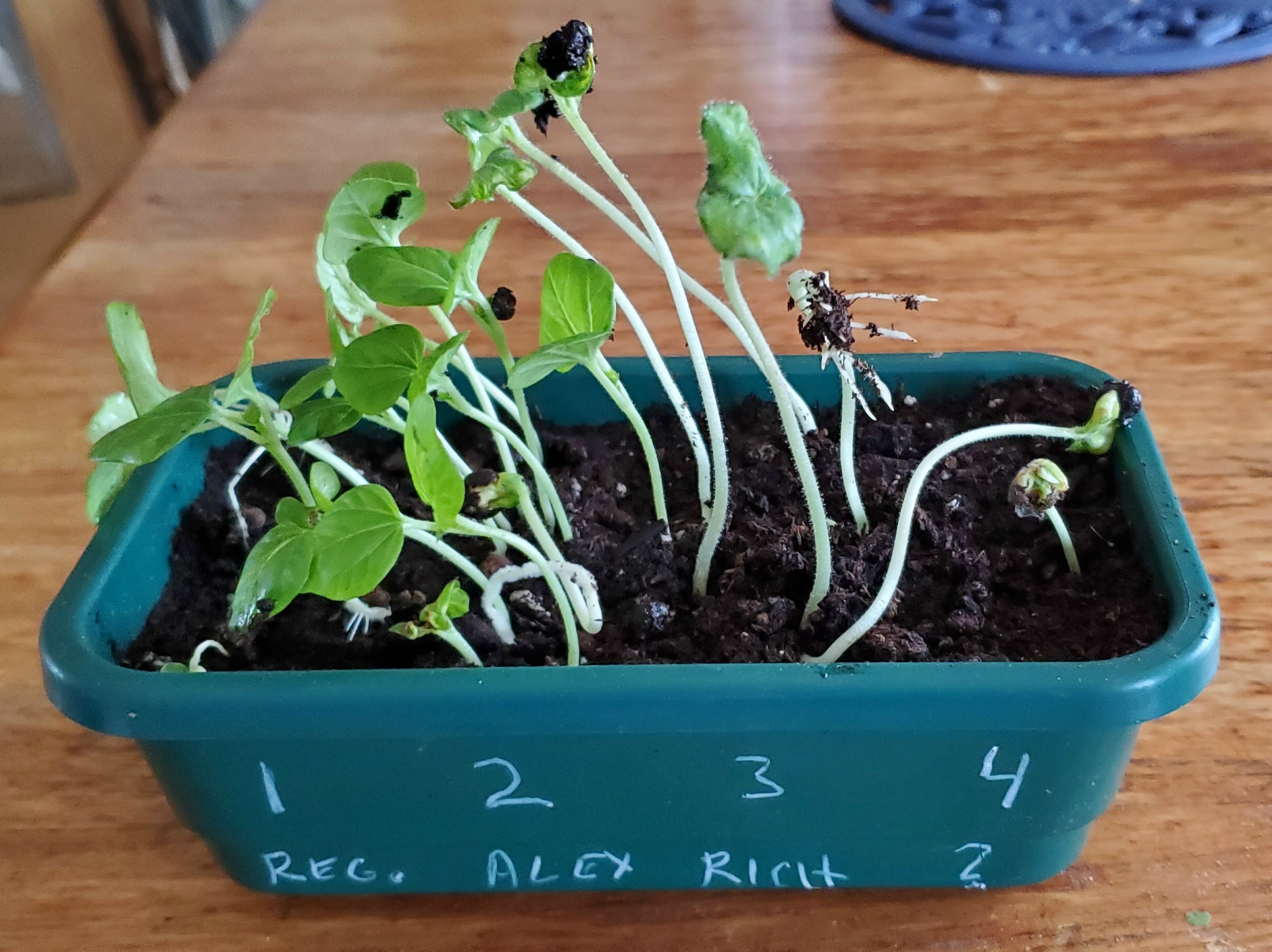
May 16th, 10 days after seeding: Sprouts from 10 seeds each, left-to-right, gathered at the workshop, from Alex at the workshop, from Richter’s, and from AliExpress
The seeds from Richter’s were two or three times larger diameter than the other seeds but the seedlings did not seem much different once they started to grow.
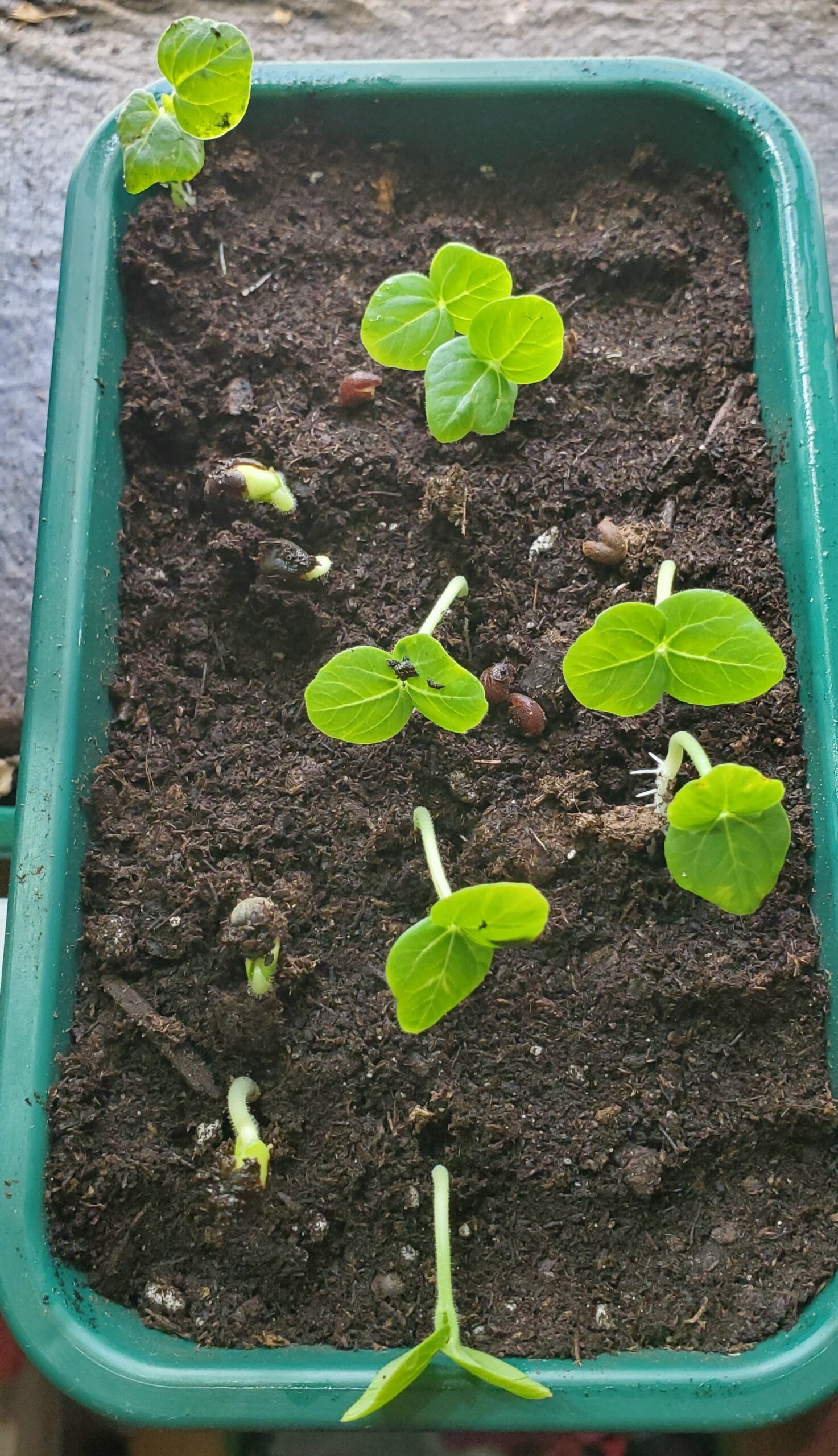
These plants produce a strong taproot so I wanted to get them out of this tray into deeper soil as soon as possible. I also wanted to be able to transplant them into the garden with minimal root disturbance (it was still too early in spring to put them out). To this end, I used cardboard toilet-paper rolls, split lengthwise, held closed with a couple of elastic bands, and filled with potting soil. I put one plant in each tube and kept them well-watered until transplanting outside.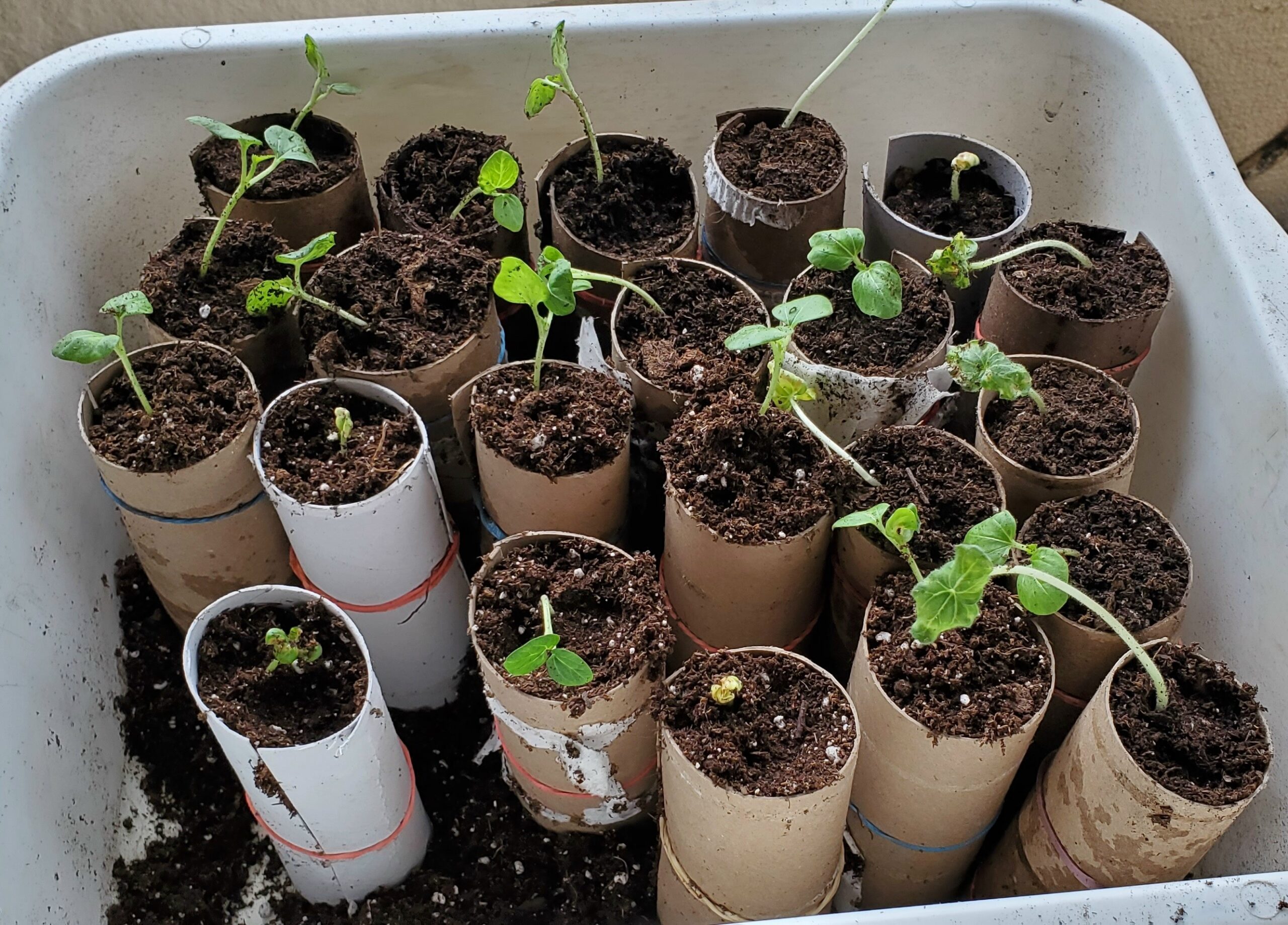 I still had old seeds left over so I seeded them back into the tray, and they sprouted within five days:
 On May 31st, when we were sure of no frost, I transplanted these all into our front garden. I had placed them outside a few days ahead to harden off a bit in the windy weather. Unfortunately most of the plants from the second round did not survive the handling during transplanting: the stems are still crisp and easy to snap, and at one point the wind blew the tray over, damaging many of the plants. The ones in the cardboard tubes went in fine, though, and after a couple of days to see what survived I direct-seeded into the gaps.
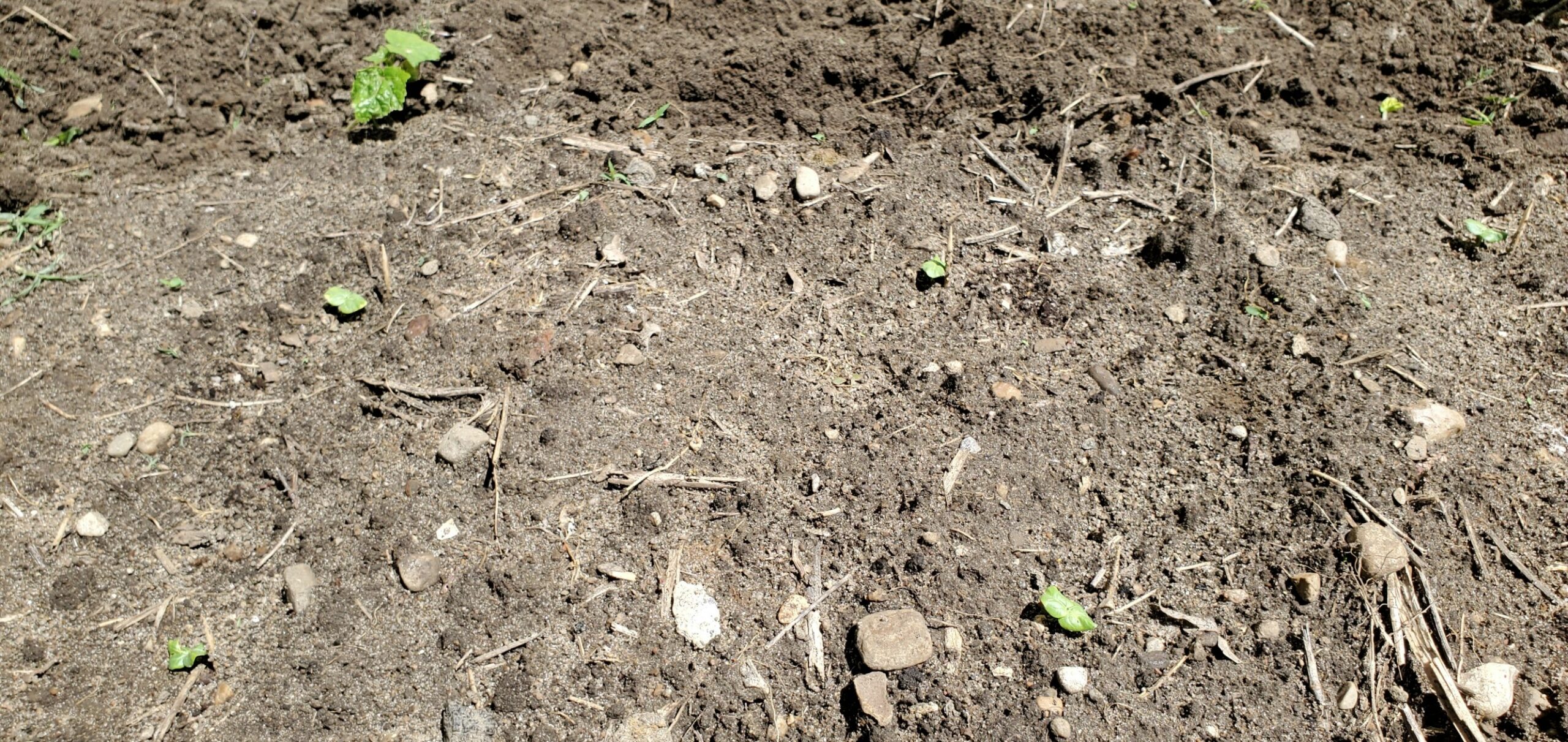
Some of the direct-seeded plants, about 7 days after seeding
In the end I have 30 plants growing. The 11 direct-seeded ones are of course smaller than the 19 transplanted ones, but also there are three or four transplanted ones that are clearly larger than the rest. In the process of all the transplanting I did not keep track of which plants came from which seeds, but these may have come from the larger seeds from Richter’s. Once the plants set fruit and the pods ripen I can see if these plants also produce larger seeds. The first pods on the first-flowering plant will be pure-bred but most of the pods will be hybrids between the plants.
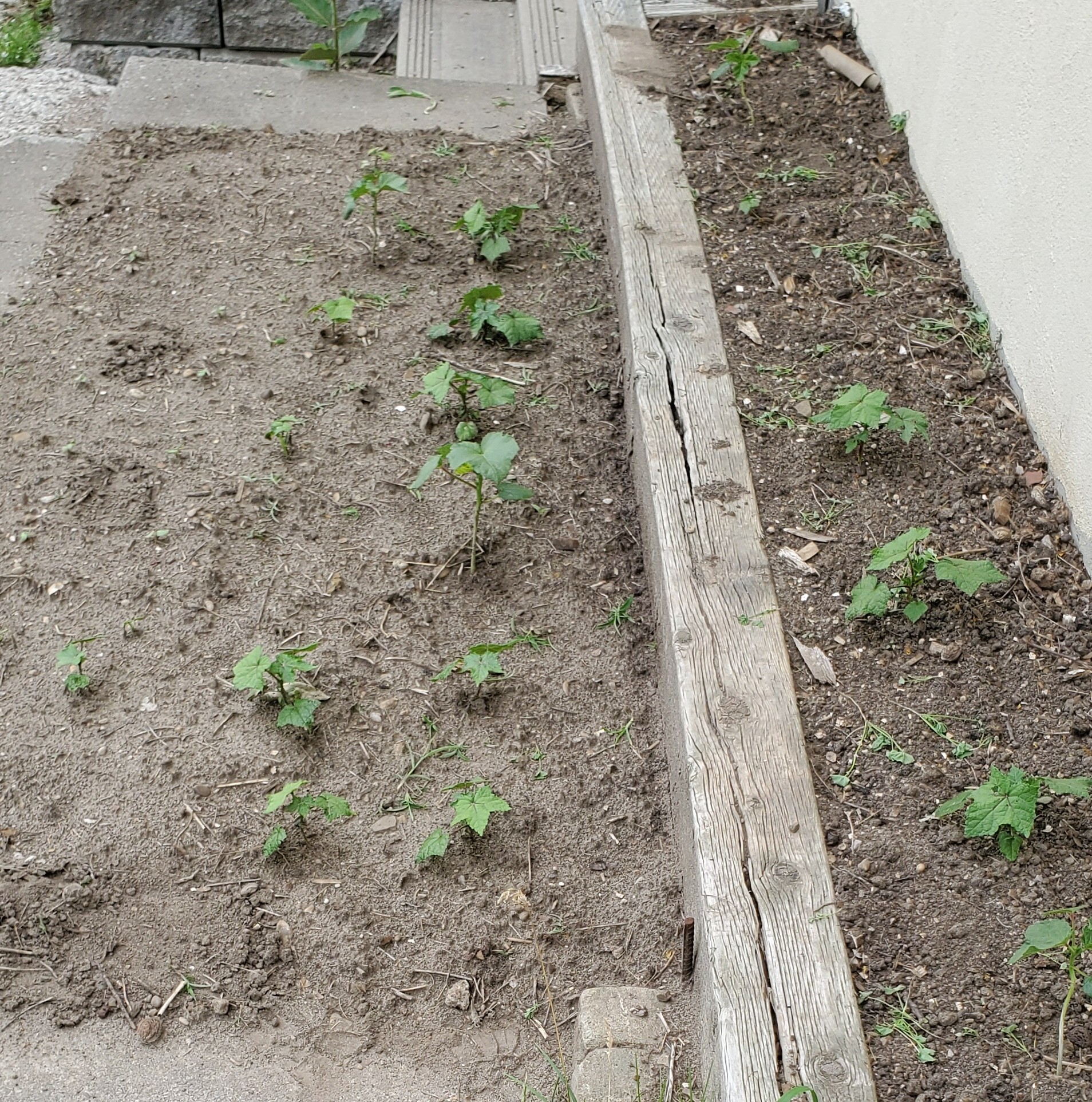
The front garden on June 24th
The goal is, of course, not larger seeds but larger roots. Come harvest time I will be weighing the plants and the roots to see if there is any correlation between the source of the seed (as well as I can determine that) and the yield, and keeping seeds from the plants that produced the best roots.
The one conclusion so far is that these seeds will keep for many years and still give excellent germination rates. Their main requirement is sufficiently warm soil. The direct-seeded plants showed about 80% germination rate, similar to the seeds planted indoors. The transplanting took its toll, though, giving an overall 50% survival rate from seed to live plant (not including the total loss of the second indoor planting). On the other hand, the transplants have several weeks’ additional growth and so I would assume will result in larger plants and larger roots.
Leave a Reply