Missing WordPress account notification e-mails

I’ve spent several days now trying to get notification e-mails to go out when a new blog user is created.

Finally got it working. I’m posting this in the hopes that anyone with the same problem will be able to find this before going down all the other false leads I found.

For the record, we are running on a Apache server under OpenBSD with php5.3. For improved security the scripts that run in response to web requests run in a subtree of the server’s file system colloquially known as a “jail” but implemented using OpenBSD’s ‘chroot’ facility.

Read more ›

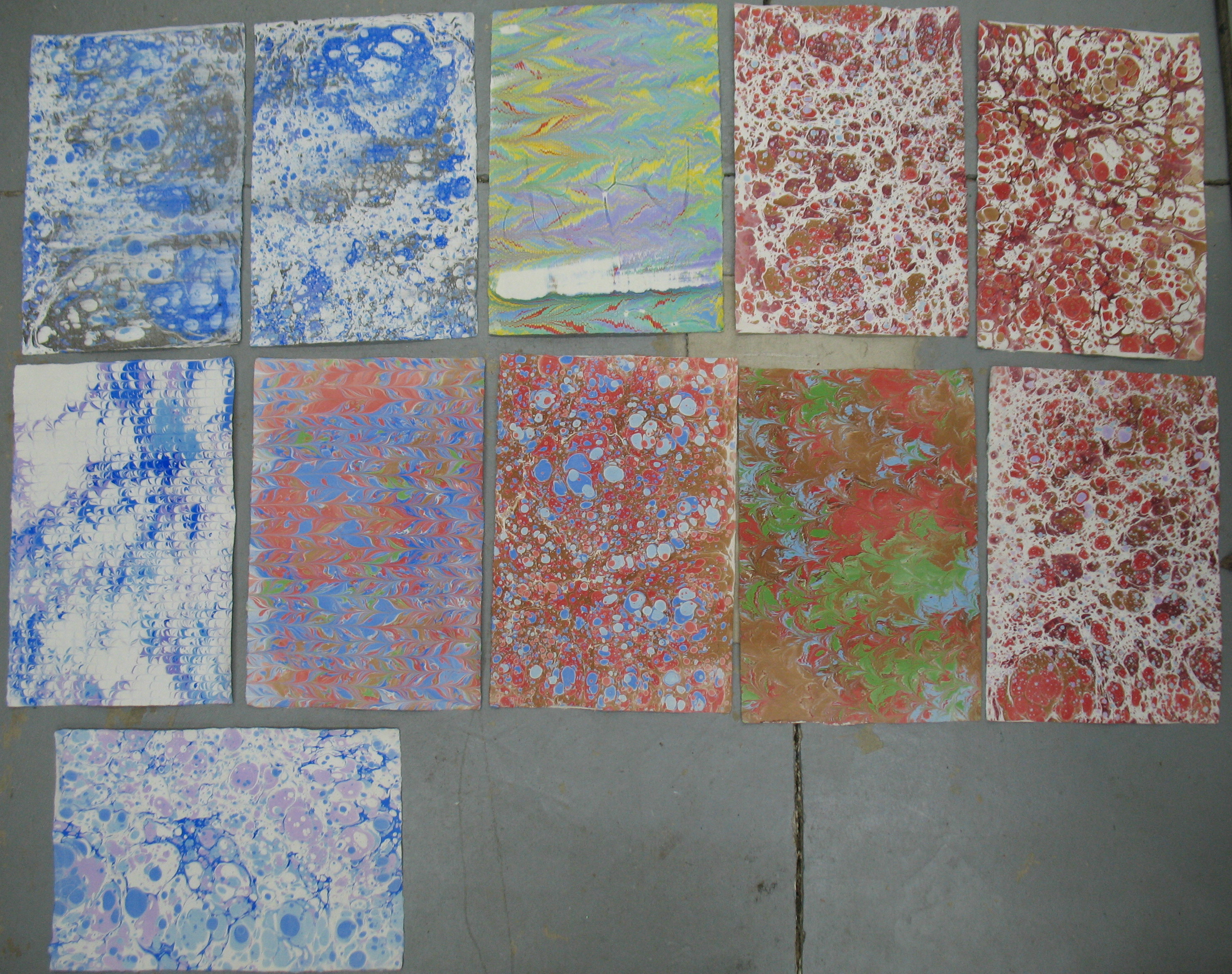
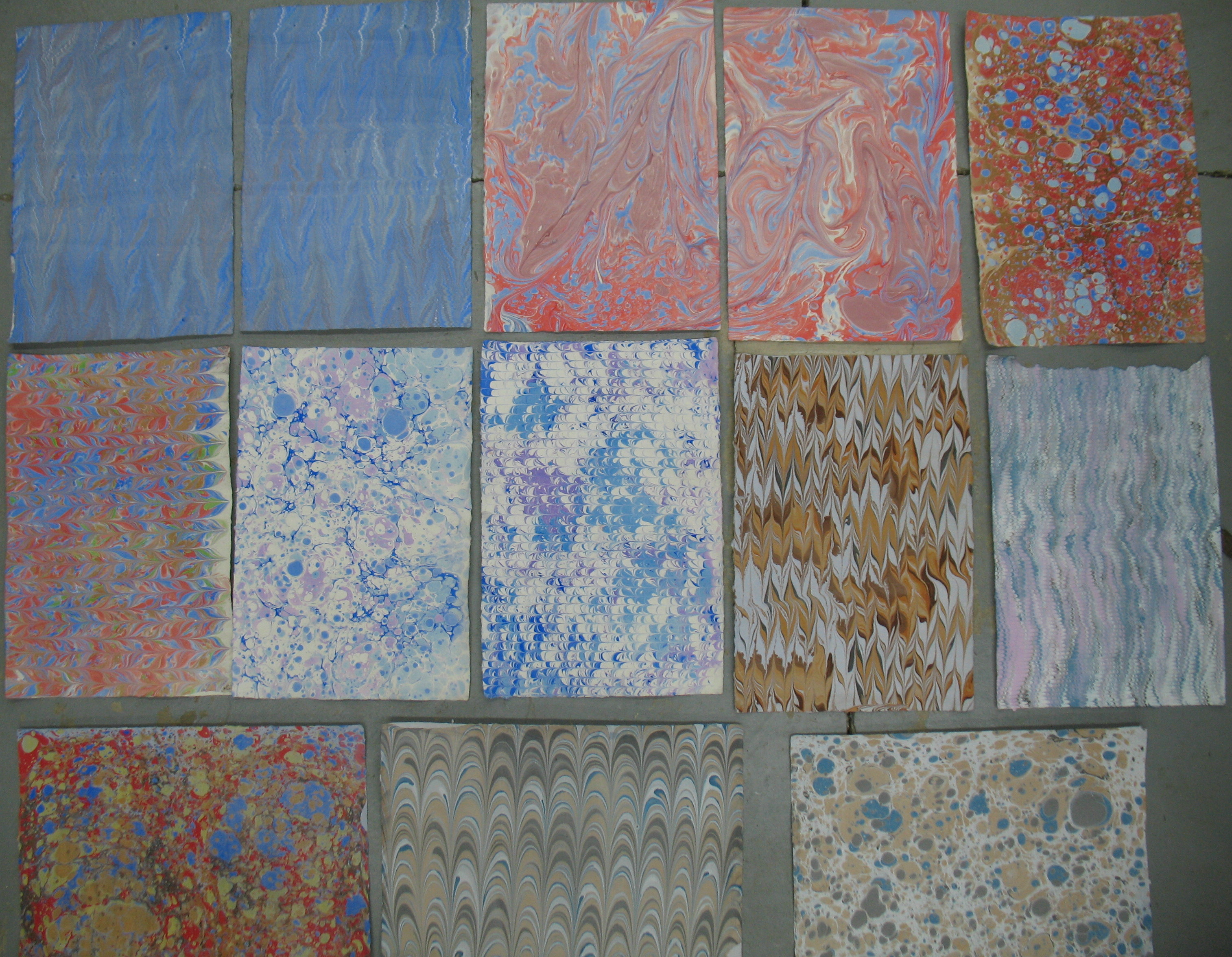
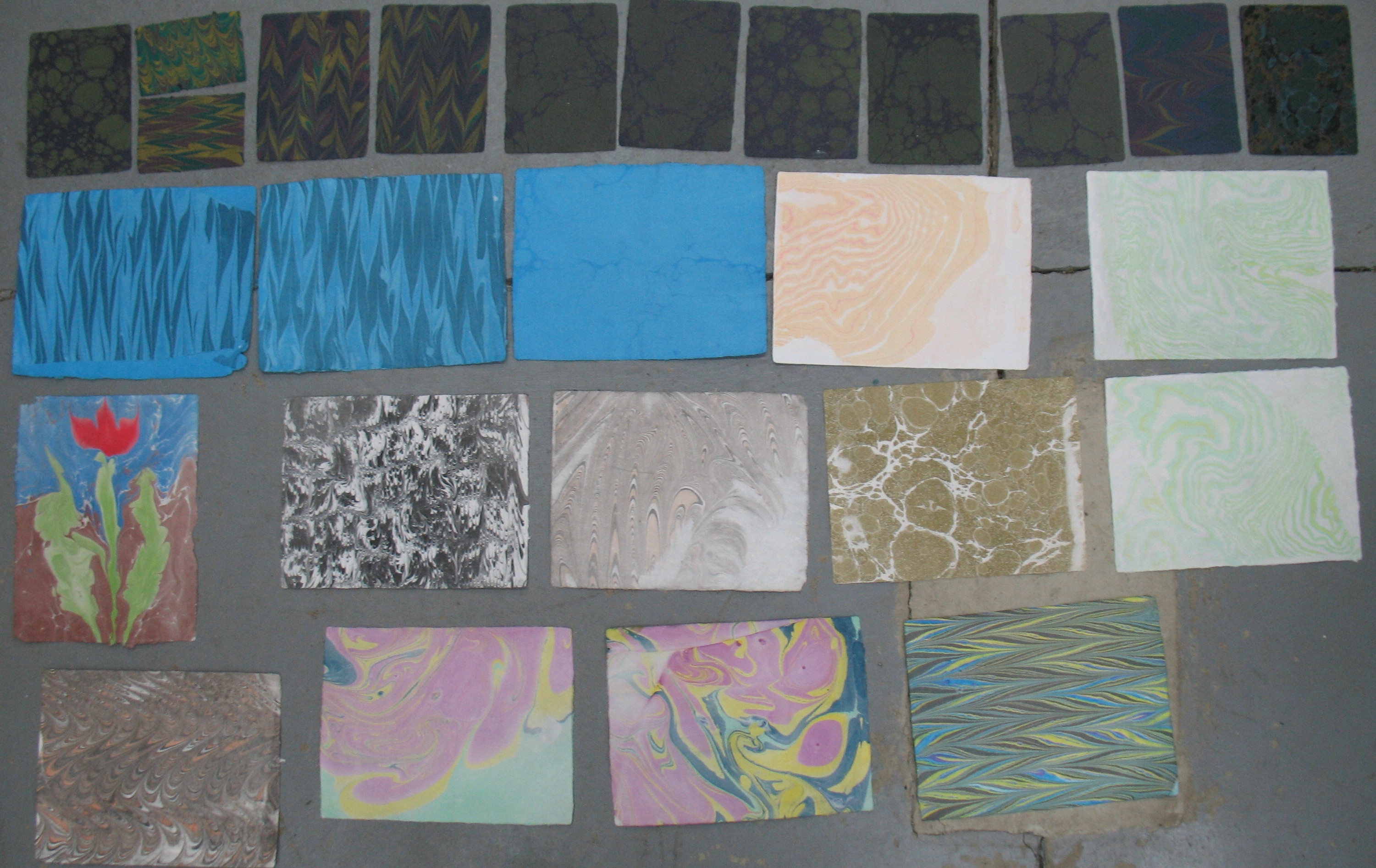
A Sampler of our Marbling

Someone asked me about our marbling on handmade paper so rather than try to describe patterns and colours in an e-mail or by phone I though I should just take a photo of all the marbling we have on handmade paper. I figured other people might be interested too, and it is about time I actually post something closer to our core business, so here are the photos for all to see.

I just spread the sheets on the floor and took photos so the quality is rather crude, but this gives some idea of the sort of marbling we can do.

Our inventory on commercially-made paper is much larger (and is mostly on 18×24″ sheets).

Marbled paper

Some of our marbling on 12×18″ handmade paper.

Marbled paper

Some of our marbling on 12×18″ handmade paper.

Marbled paper

Some of our marbling on 8½×11″, 5×7″, and 3½×5″ handmade paper.

Monotype Pump Enhancements

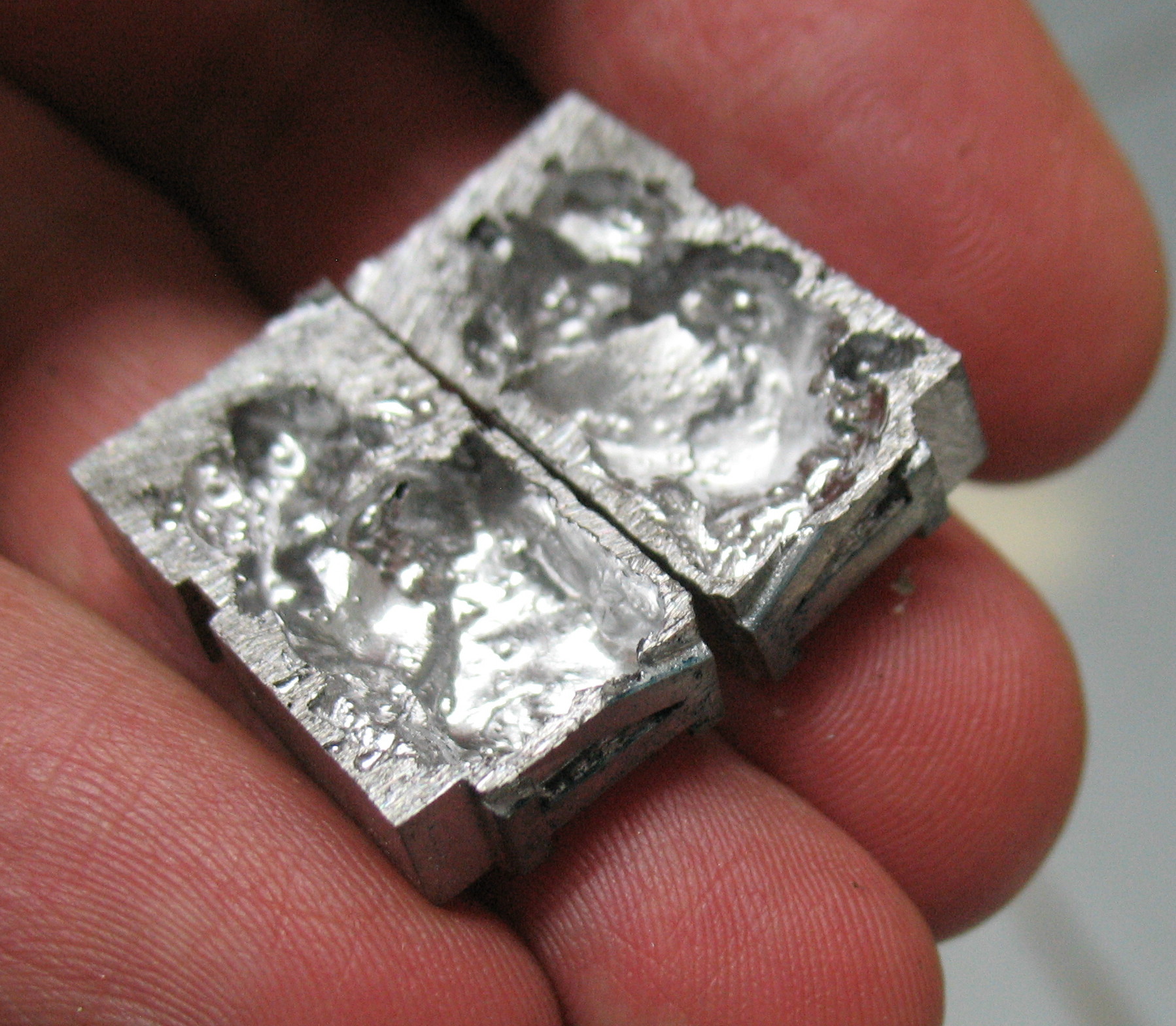
Hollow 36pt type

This is a capital M in 36 point cut in half to show the huge air bubble in the body of the type.

My Monotype Composition Caster is a British-made one, with a serial number indicating fairly late manufacture (1960’s) so it should in theory be fitted will all the latest bells and whistles. But for some reason it is missing the pump modifications that are required for casting larger size display type. As a result when I try casting 36-point type I end up with hollow type whose face caves in after only a few impressions. Properly cast type of this size would have thicker solid walls and its core would be a froth of small bubbles.

There are three main requirements to casting sufficiently solid type:

  1. The molten type metal is injected into the casting mould by a single stroke of a piston pump, and this stroke must be able to pump enough metal to fill the type.
  2. The pump stroke must be fast enough that the mould fills before the metal in the injecting nozzle solidifies, stopping any further flow. Fast injection also replaces the large single air bubble with a froth of smaller bubbles, which is much stronger.
  3. The final pump pressure must be high enough to compress the bubbles to a small size. There is little chance for the air that starts in the mould cavity to escape, so the only way to reduce the bubble size is to compress the bubbles using several atmospheres of pressure.

My caster had the high-strength spring required for item (3), but did not have the extended-stroke pump required for (1) or the pump latch required for (2). As a result I am now working on installing these two items on my caster. This is proving to need a combination of scavenged parts and home-made parts.

Read more ›

Lily’s first sheet of paper

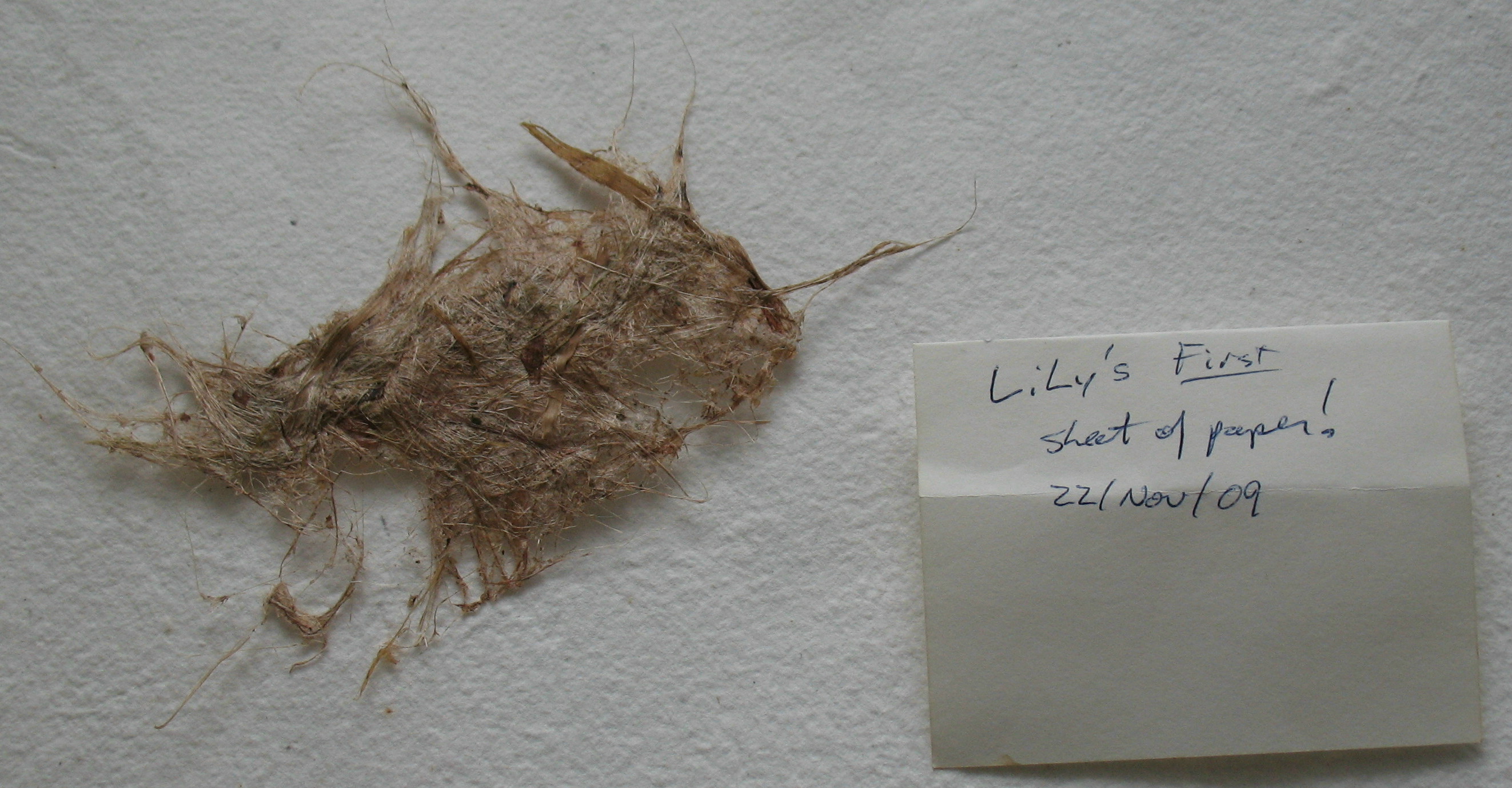
Back in November 2009, when Lily was only about 2½ years old, we attended the Branson Banana Bash organized by Mimi Aumann. It was a chilly few days in the Ozarks in November, where we tried various methods for pulping banana leaf stems to make paper, and also helping Mimi with her kozo harvest and processing.

20091125IMG_2496That was when Lily made her first sheet of paper, using a mould made by Brian Queen and a matching deckle I added which makes paper about the size of a business card. The pulp was coarse, and Lily’s technique was a bit rough, so the sheet is too, but we kept it and it recently turned up to remind me to make this post.

About that Wayzgoose poster

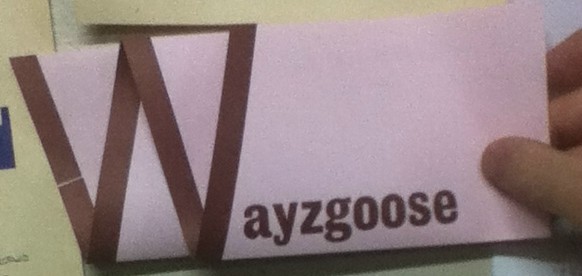
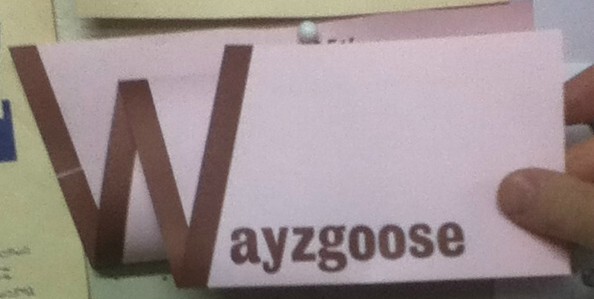
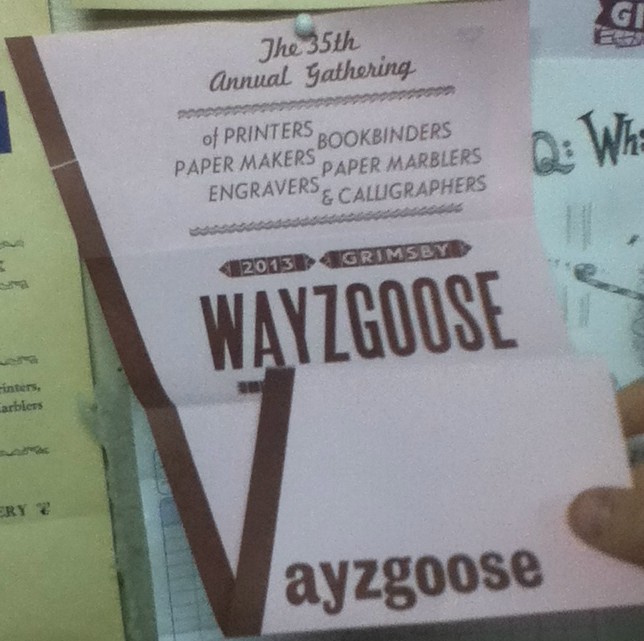
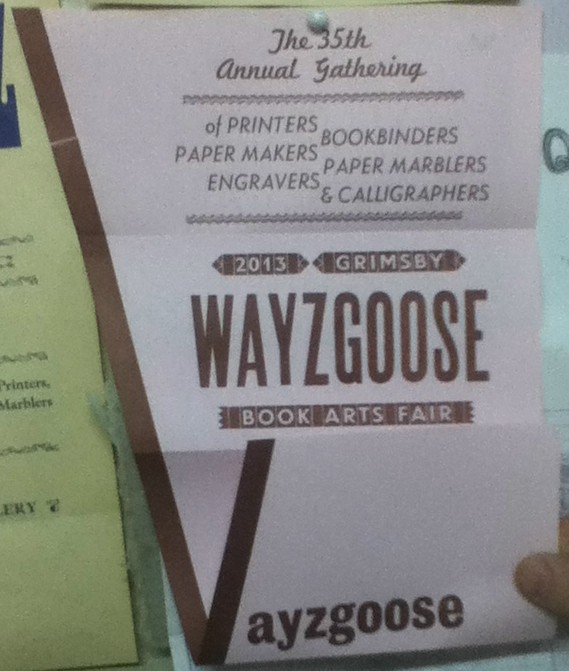
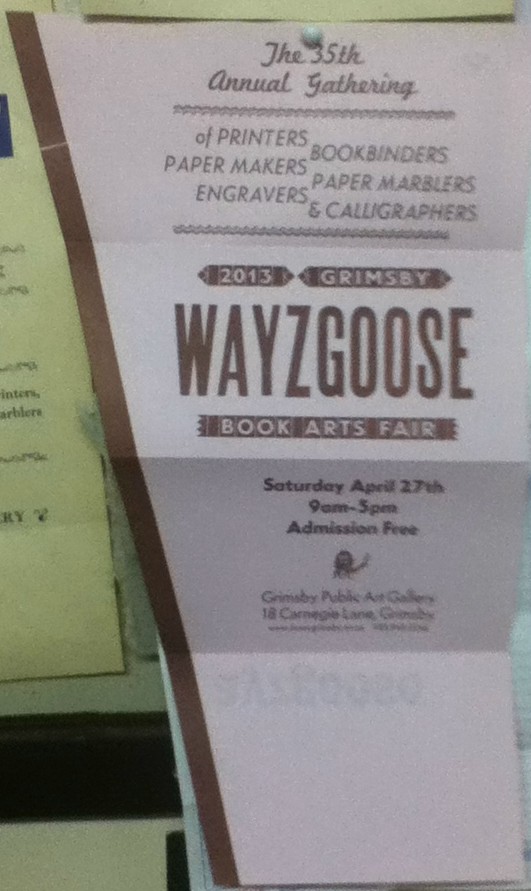
The poster image I attached to the announcement about the Wayzgoose in Grimsby was from a pdf file e-mailed to us with no additional information. I found the poster kind of strange, frankly.

However, I have now seen the actual item; it is intended more as a mail-out flyer rather than a poster, there is actually printing on the back of the sheet, and it is not even rectangular.

Here is how it comes folded in the mail and how it deploys:

IMG_2707
IMG_2706
IMG_2705
IMG_2704
IMG_2703

2012 Paper Mulberry Crop

A few year ago, a mulberry plant started growing in my yard. According to my tree identification book, it is a paper mulberry, Broussonetia papyrifera. This identification is not definitive, since Wikipedia mentions a sticky sap which I don’t recall observing. Other possibilities are the black (Morus nigra) or red (Morus rubra) mulberries.

Since then I have been cutting it back late each fall but have not done much with the branches yet, so it has been collecting along with all our other raw plant fibres “to be processed some day.”

2012 Paper mulberry crop 2.6kg green weightWhen we moved three years ago I took the plant with us, and last fall we got a pretty good crop off it, about 2.6 kg of green wood with bark. I cut the branches to the right length for our steamer but as usual did not have the time to process them. I have this vague recollection that freshly-cut stems are easier to process than ones that have dried out, so I stood the bundle in a pail with some water in the bottom and left them outside with the intention of processing them soon. But I never got around to that, and recently I took a look at them and they still seem fresh, with the buds showing green if cut open.

I am considering pulling a stem or two out of the bundle (not an easy task—they are wrapped quite tightly) and trying to root them to propagate the plant. I will have to do this soon because the warm weather will soon bring the buds out of dormancy.

Currently the plant itself is a stump about 5cm (2″) diameter and 60cm (2′) tall. I want to cut it back before the buds open this spring to reduce the number of shoots produced, hopefully getting longer and thicker ones instead.

CBBAG Book Arts Show & Sale in Ottawa

CBBAG Book Arts Fair posterOn Saturday, May 4th (that’s one week after Wayzgoose) from 10:30am to 4pm, the Ottawa Valley Chapter of the Canadian Bookbinders and Book Artists Guild (CBBAG) will hold a Book Arts show and sale, featuring 25 exhibitors along with a speakers program and book arts exhibition. The show covers bookbinding, paper, calligraphy, prints, letterpress, wood engraving, and books as art.

This event will be at Library and Archives Canada on Wellington Street. Admission is free.

We will have a double table at this show so we will have plenty of room to spread out our selection of paper and marbling.

For more information you can visit the show’s web site.

Wayzgoose at the Grimsby Public Art Gallery

Wayzgoose posterOn April 27th 2013 from 9am to 5pm, the 35th annual Wayzgoose Book Arts Fair will be held at the Grimsby Public Art Gallery in Grimsby, Ontario. This is a one-day show of printers, bookbinders, papermakers, paper marblers, engravers, and calligraphers, all showing off their works and some running demonstrations. If you are interested in book arts and small press publishers, this is the show in southern Ontario.

We will have a table at the fair selling our paper, marbling, and supplies. We were a little late registering so we will be in the Carnegie Commons building next door to the main Gallery building.

Every year an anthology is produced containing pages contributed by some of the fair participants (and also by some who could not make it). This year is special for two reasons: this is the first year we have contributes content to the anthology (although for the 25th we printed the table of contents), and also this year there will be a second anthology of juried contributions which has be in the works since last fall.

The best part yet: Admission is free, and there is lots of free parking all about the area of the gallery!

For more information you can visit the Wayzgoose web site.

Rural Routes Studio Tour

Tour roadside directional signSince we moved to New Dundee in 2010, we have been participating in the Rural Routes Studio Tour. This takes place annually the first weekend of November, and includes artists and artisans in the rural area to the south-west of Kitchener. Geographically this would be the southern part of Wilmot Township (including the towns of New Dundee, Baden, and New Hamburg) and the northern part of Blenheim township, about as far south as the hamlet of Washington.

For two days, members of the Tour open up their studios and workshops so the public can see their work. Some of the members offer demonstrations, and even hands-on participation. All the members have their works available for sale.

For the 2013 tour, its 10th anniversary, we have a freshly-designed web site at www.ruralroutes.org, and are featuring a monthly auction of works from the various members of the tour.

This year, the tour takes place Friday and Saturday, November 1st and 2nd, 10am to 5pm. We still have a while to decide what we will have in terms of demonstrations.

Welcome to our Blog

It was finally time to add a little activity to our web site, so we have added a blog hosted on our site using WordPress software.

For now we will be the only people posting, but if you have any comments you can e-mail us at our regular address info@papertrail.ca. Some day we will open up the site for public comments on postings.

Hopefully we will be posting frequently, and to try to keep things organized we have an overwhelmingly rich set of post categories, allowing us to mark posts as to who was involved, what other organizations were involved, what sort of activity the post is about, and what was used for the activity.

The posts won’t always be about papermaking, and in fact may not even be about anything the Papertrail is involved in.

We will probably be frequently tweaking the site theme, and eventually our original site pages will be rolled into the WP world.

Top