
Arrival in Nagaoka
I arrived in town about an hour before the other participants and walked to my hotel, the Route Inn Nagaoka Ekimae just across the street from the train station. It was before the check-in time of 3pm, and I expected to have to leave my luggage in storage until then, but my room was already ready so I got to check in early. Paul Denhoed, the workshop organizer, had already made all the booking arrangements including my extra night’s stay after the workshop due to the timing of my return flight.
I returned to the train station to meet everyone else as they arrived, and we all trekked back to the hotel and checked in. Paul actually lives in Tokyo so he was also staying at the hotel. One interesting perq of the hotel was that you had the option to forego some of the full daily room cleanings, and instead receive tokens for either of the dispensing machines near the lobby, one for alcoholic beverages, and one for non-alcoholic. The tokens are different and so you have to decide when you collect the tokens, though I expect you could trade them at the front desk.
Daily schedule
Every day, we would get breakfast in the hotel restaurant. Breakfast was a buffet which included some western items (generally scrambled eggs, bacon or sausages, and bread) but was mostly Japanese food usually also with some other Asian offering like a curry or stir-fry. There was always soup, and a rice dispensing machine—you put your bowl on the stand and press a button for a small, medium or large serving!
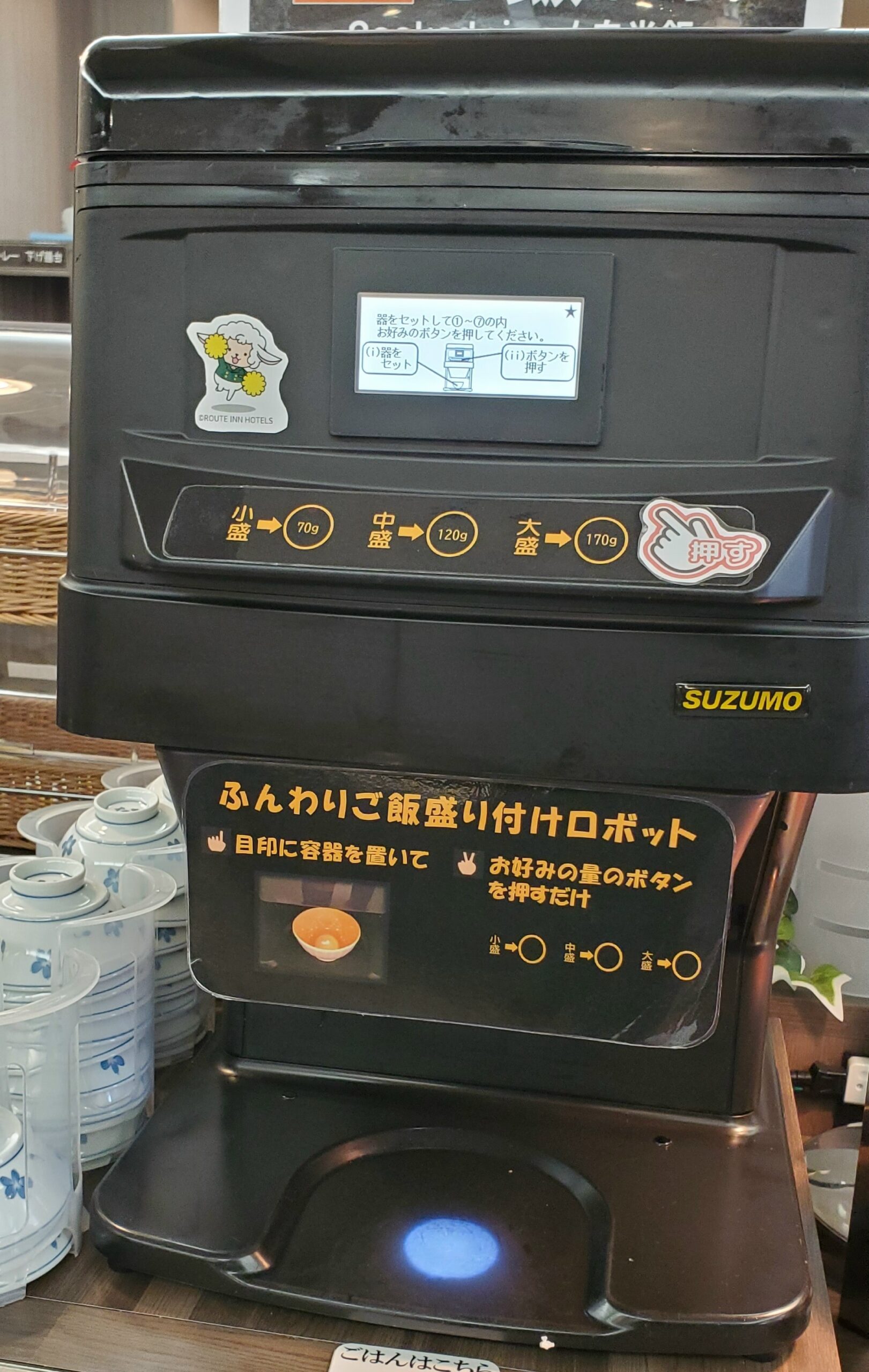
The rice dispenser. I had already learned the kanji for small (小) and large(大) from the flush buttons on the toilets
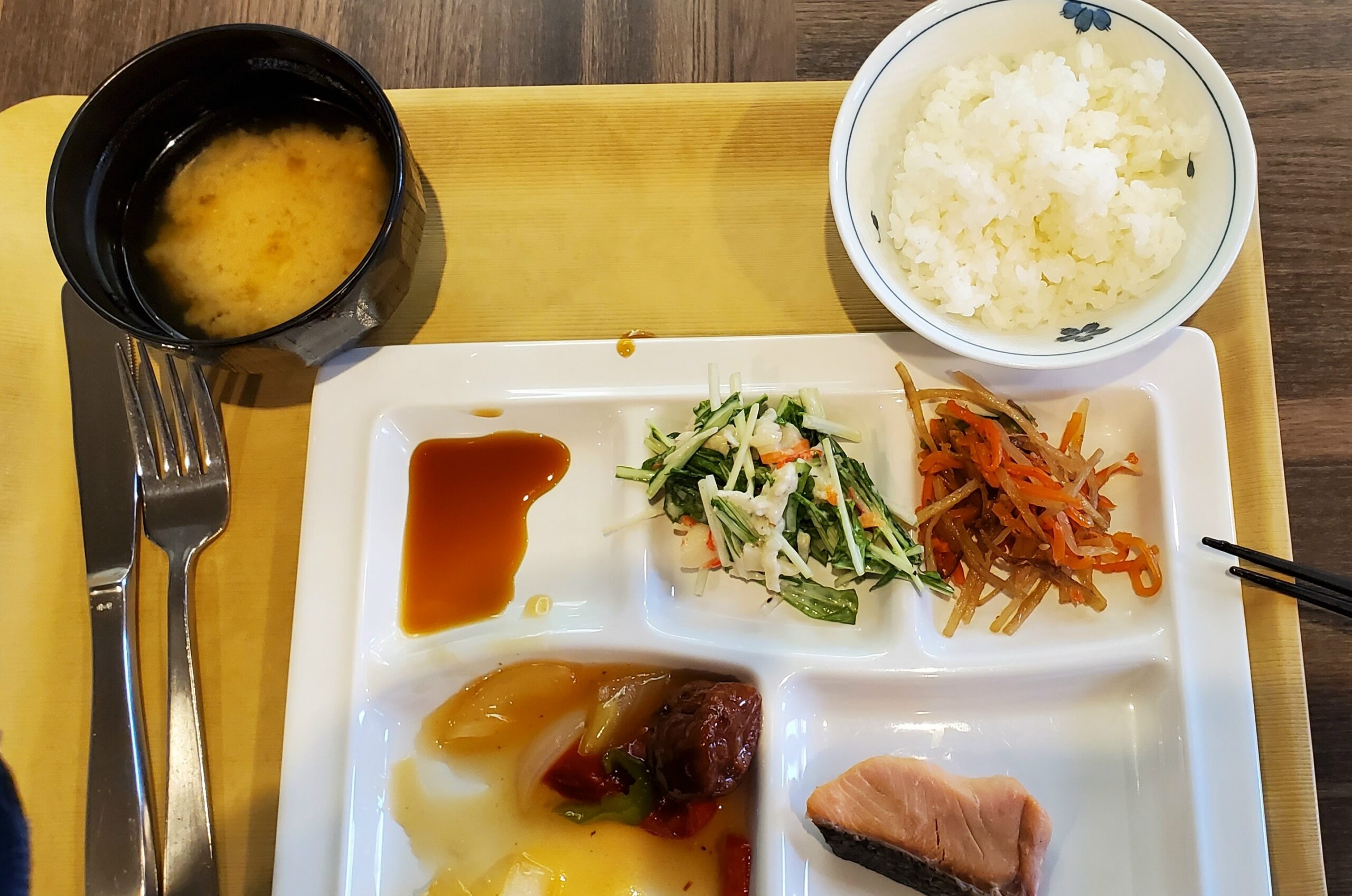
One day’s partially-eaten breakfast. Selection and camera framing varied from day to day
Through the workshop, after breakfast we would meet in the hotel lobby around 8:30. From there, Imai-san would ferry us in a rented van to the Oguni studio, perhaps a 20 or 30 minute drive. On the way out of Nagaoka we would stop each day at a Harashin grocery store and each of us would pick out some take-out pre-made meal for lunch. The Oguni studio is out in the countryside so there are no convenient lunch places nearby. Lunches were included with the workshop fees, so Imai-san (or, perhaps, Paul) would purchase all our chosen food.
Once at the studio, we would go through the morning program for the day, and then eat lunch in the studio where one section was set off as a sort of meeting area with chairs and a large table. We’d make tea or coffee and miso soup to accompany the lunches we had picked out. Most days, someone will have chosen some dish, often strawberries or other fruit, to share amongst ourselves with lunch.
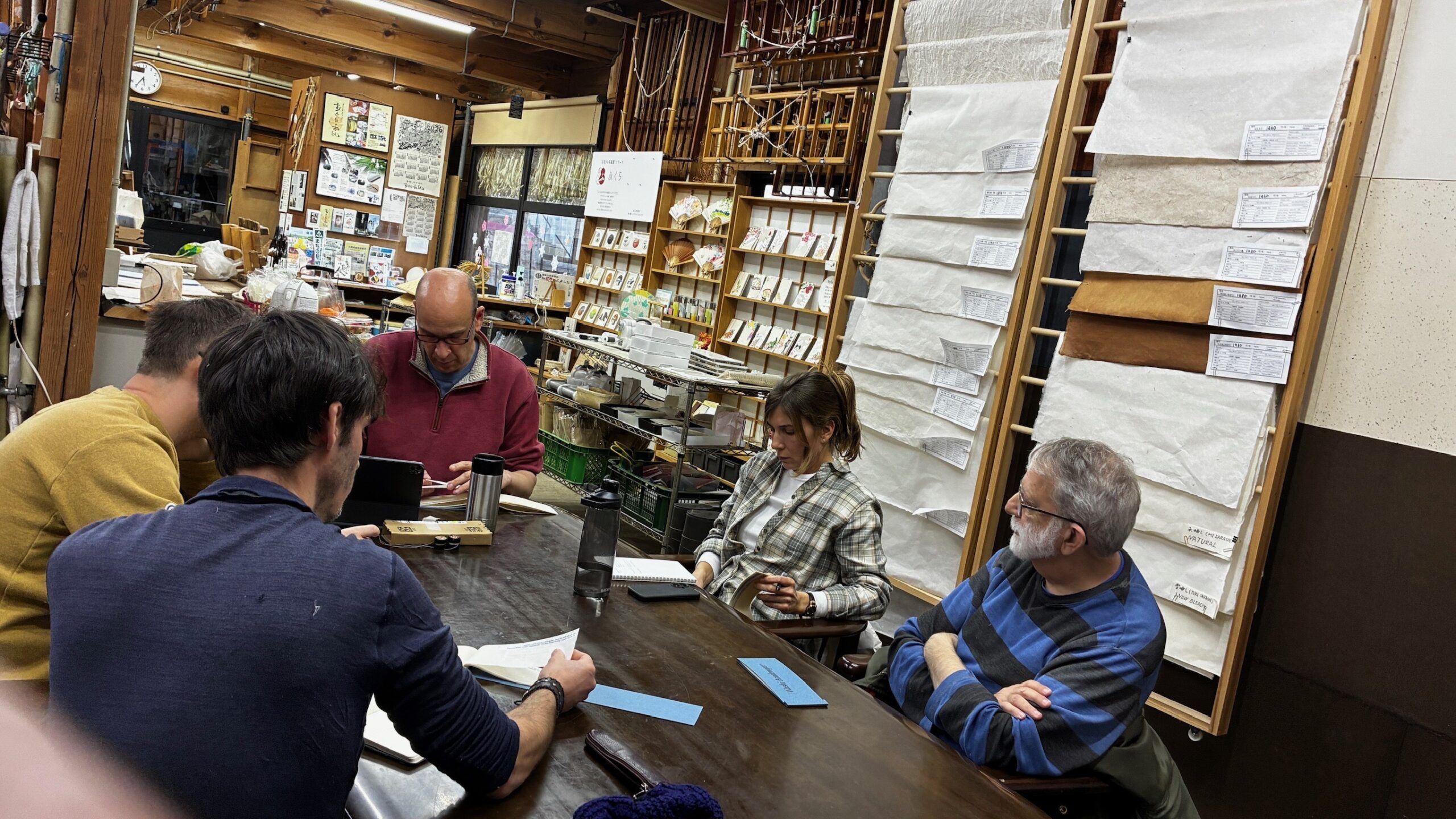
The meeting table where we ate lunch. Here we are actually examining booklets of sample papers Paul has prepared for us
The lunch area was also sort of the display area for products when customers visit the studio, so there was a rack of paper samples, as well as various cards and gifts.
After lunch we had the afternoon program for the day. Once that was done, if we has spare time, we’d sit around the lunch table and talk paper or papermaking tools, or explore the studio asking questions about things not specifically covered in the workshop. Generally around 5 or 6pm, we’d all pile back into the van and Imai-san would drive us to someplace for dinner, a different place each day. Dinner was not included in the workshop but for convenience Imai-san would pay, and the cost would be divided and appear on our final accounting for the workshop (as would our hotel rooms).
Usually around 8 or 9pm we’d be back in our rooms for a good sleep. Imai-san would return home (almost right next to the studio) for the evening, perhaps stopping at the studio for some unfinished prep work for the next day.
Outings and side trips
In the late afternoons and evenings we had several activities outside of the studio. As I write this I realize that I may have the schedule confused in my mind, because we also visited a cafe one afternoon and I don’t recall how it fits in with our other outings. Perhaps that was lunch on Saturday.
Wednesday
Before dinner we had a short craft project, making a traditional style of home decoration from rice straw. This was hosted at Chihiro-san’s father’s house (IIRC), which is just across the river from the studio and next to the Imai’s own house. These items are actually more than just decoration, but traditionally are also, for lack of a better description, a sort of fertility charm to ensure a good harvest of rice.
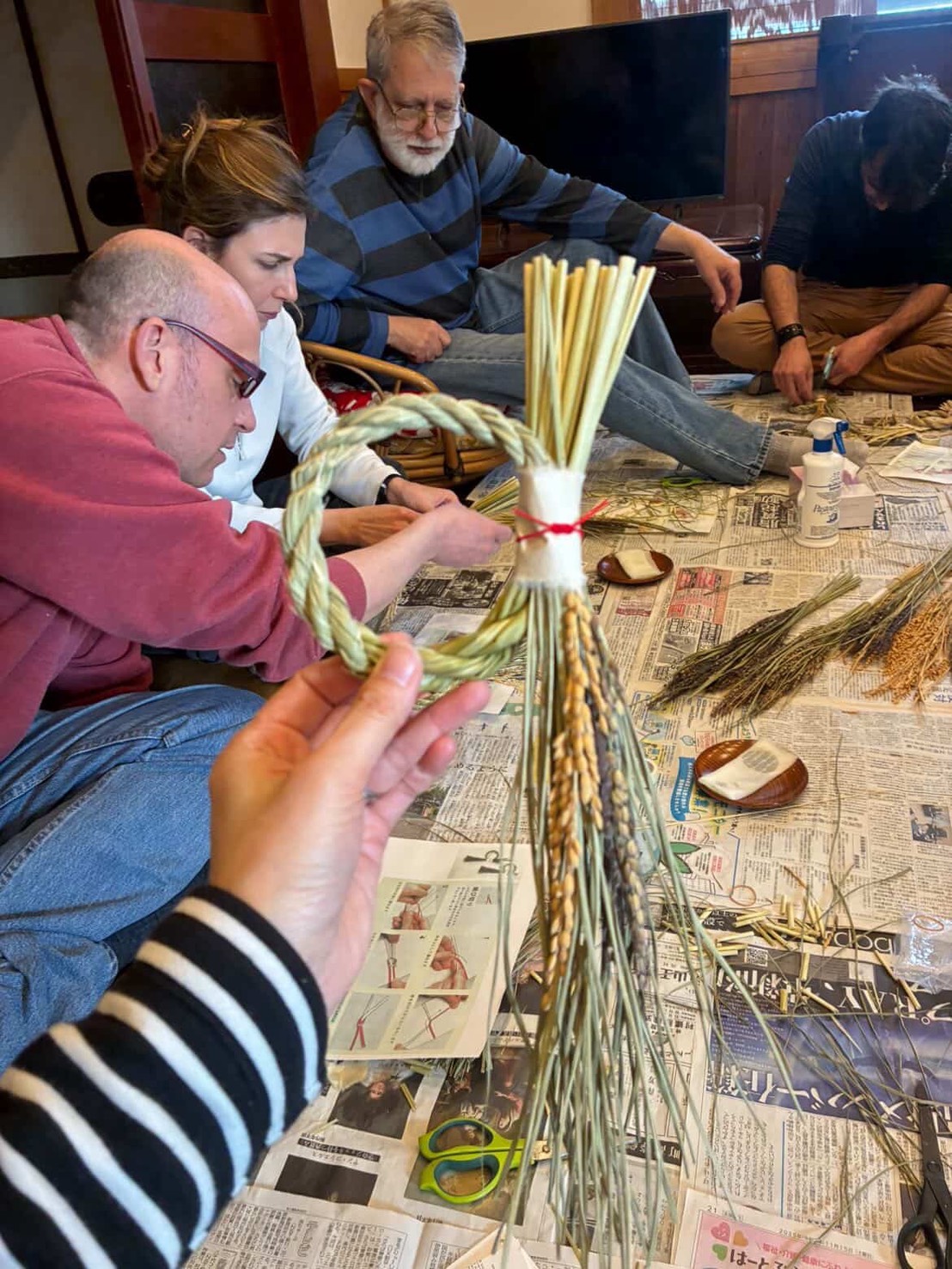
This was the instructor’s; ours did not all turn out quite as pretty
Afterwards we went to dinner in Nagaoka, and while waiting in our private room for the food to arrive, Chihiro-san entertained us with free-hand paper cutouts of animals we requested.
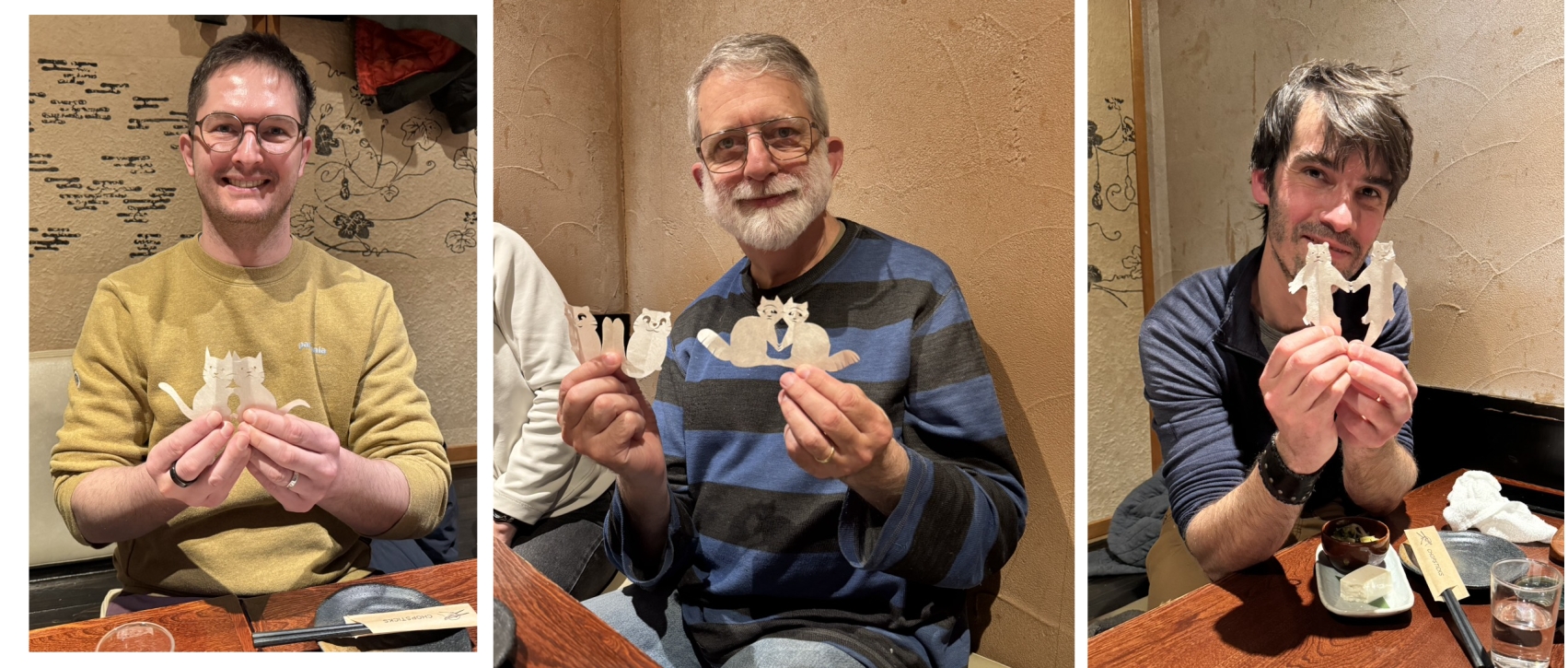
Michele’s cat, my raccoons, and Alex’s “une loutre” (otter, I had to translate for him). Unfortunately I didn’t get Clara’s photo, but I believe she asked for a mermaid
Thursday
Thursday evening, we visited the Imai’s home for dinner. Afterwards we also each made little presentations of what sort of work we’re doing and how it connects to the workshop.
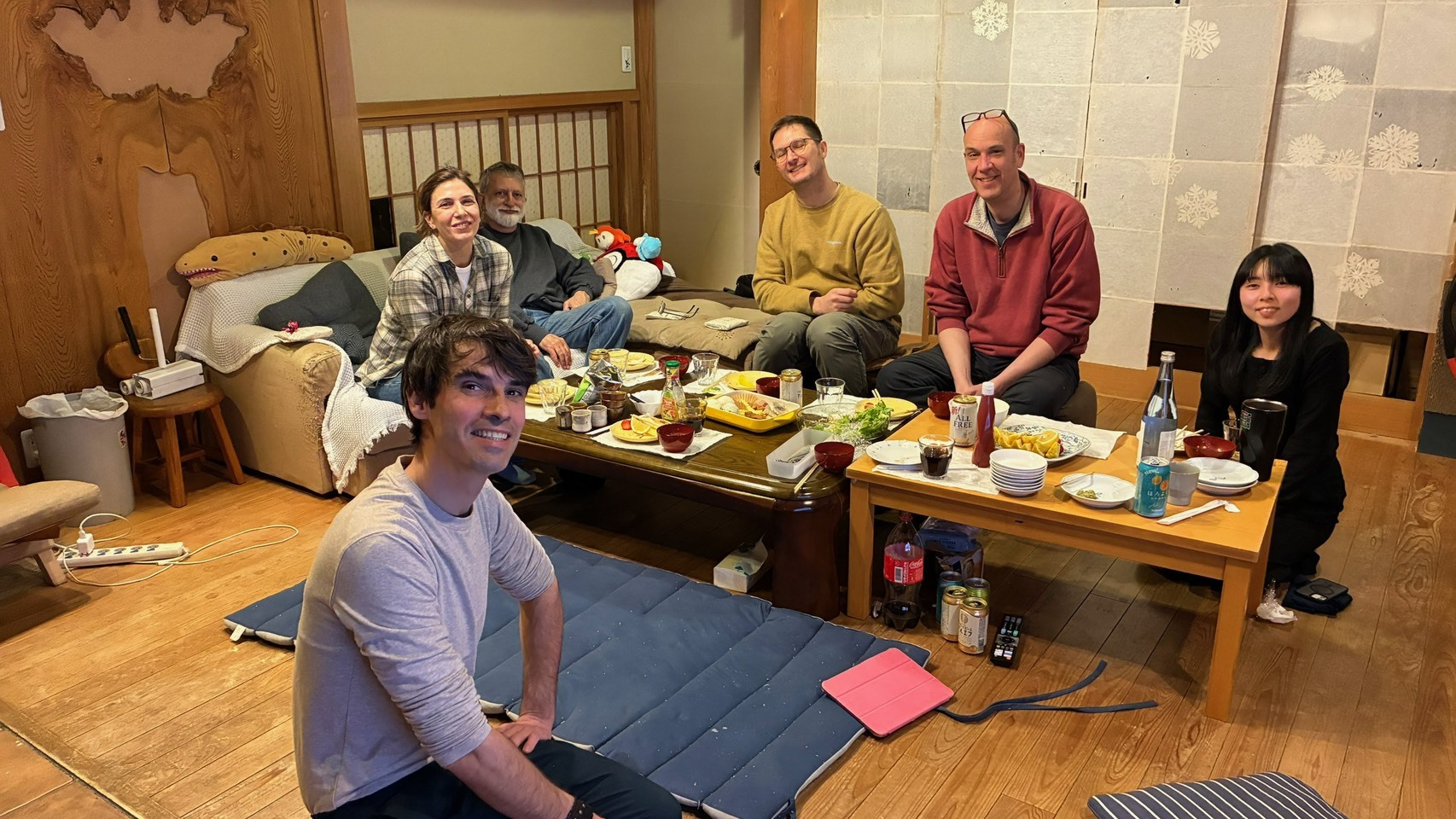
Imai-san is behind the camera for this, and that’s one of his daughters at the table with us. The room dividers are all paper from his studio
Friday
With most of the workshop behind us, we went to Echigo Kawaguchi Onsen (public bath) to unwind. This place is a sort of resort, which includes hotel rooms, restaurants, rental houses, and exercise rooms in addition to the baths. Some of the outdoor bathing areas provide a spectacular view of the river valley below.
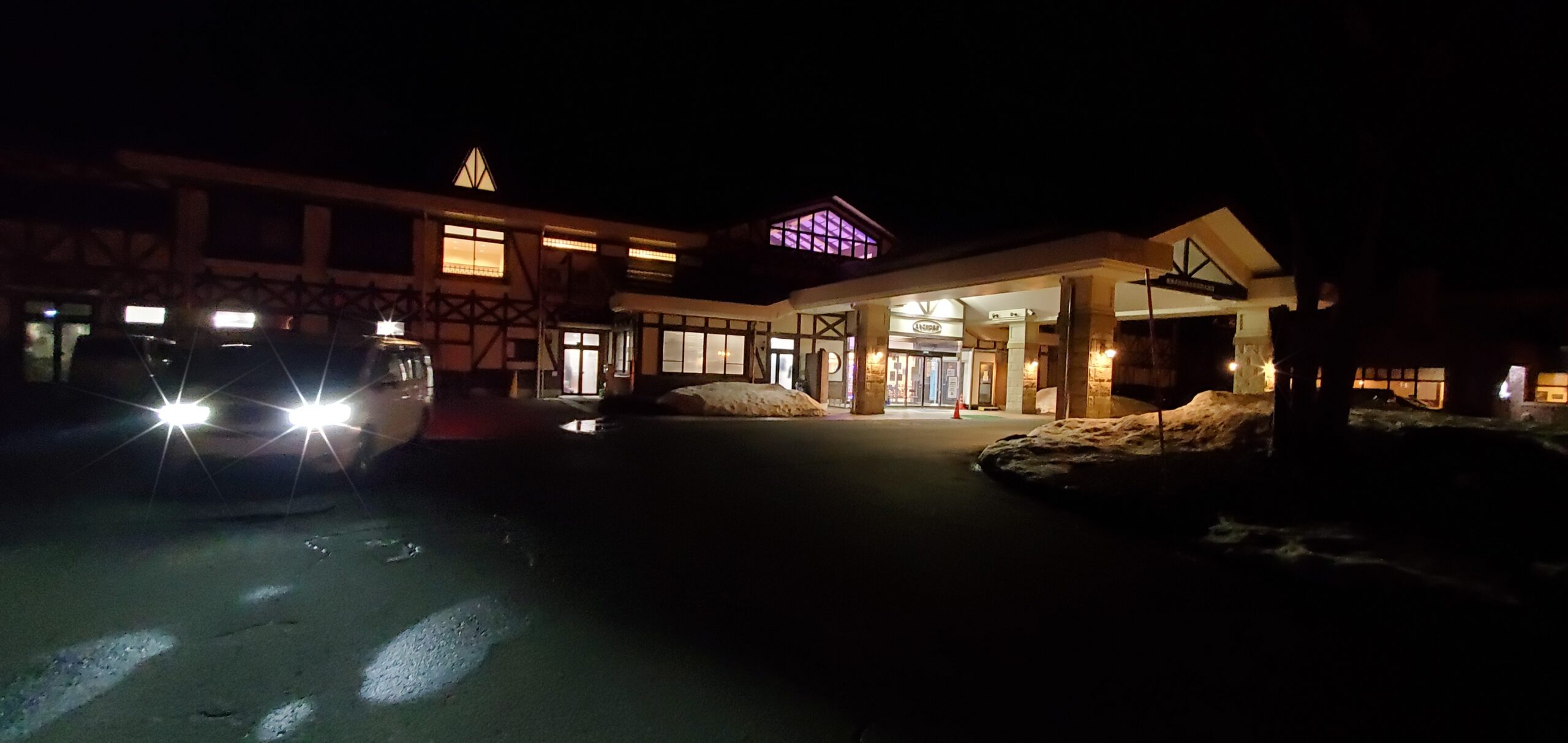
Outside the onsen as we were leaving
Clara went to the ladies’ public bath, and the four of us took a private room. This allowed us to talk freely, as loud conversation (or for that matter, pretty much any conversation) is frowned upon in the public baths, and also meant Michele would not have any hassle with his tattoos. Onsens do not allow tattoos in the public baths because of their historical association with Yakuza criminal gangs, although they will usually allow a small one if covered up.
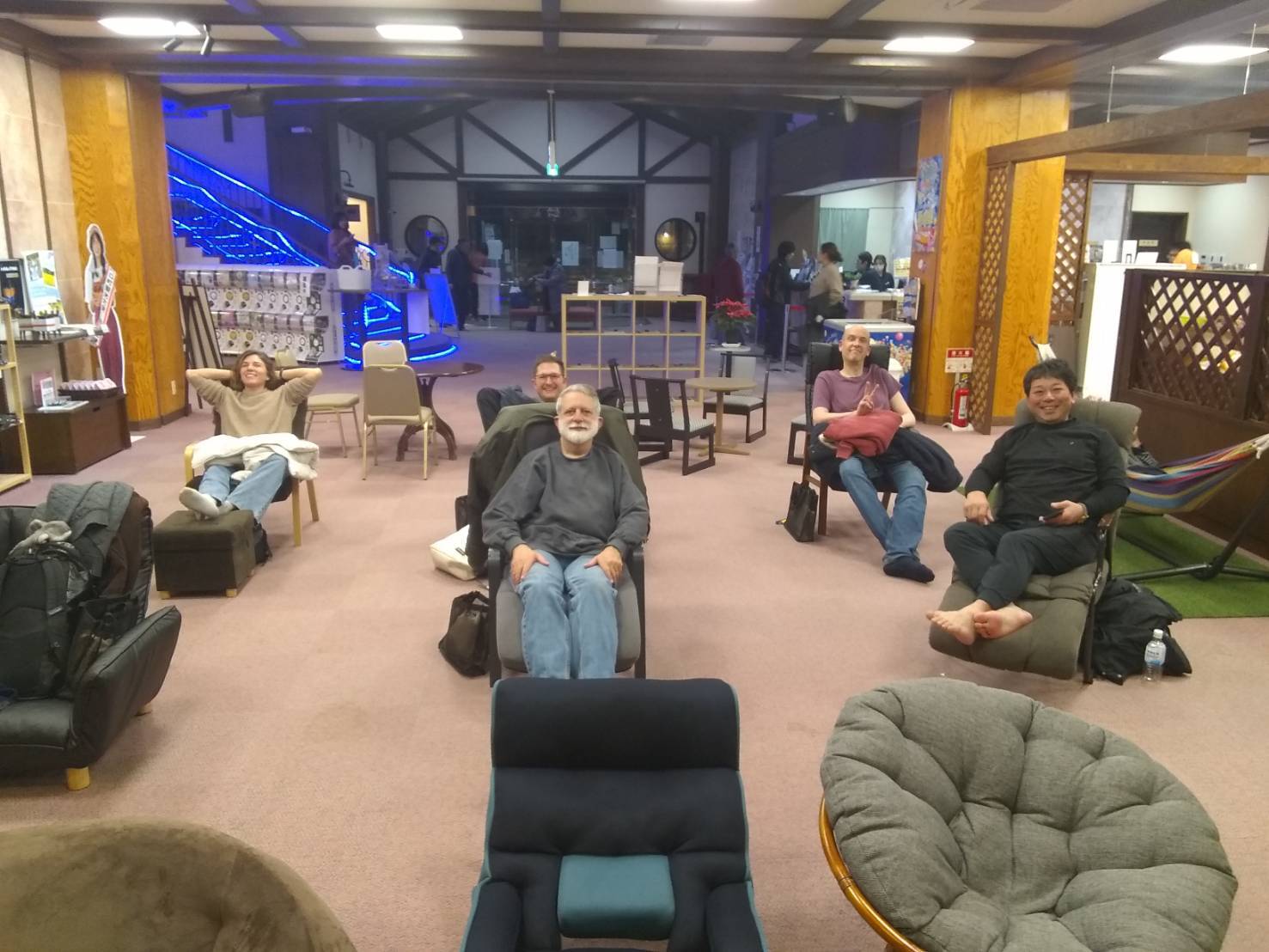
Unwinding in the lounge after unwinding in the bath (photo by Alex)
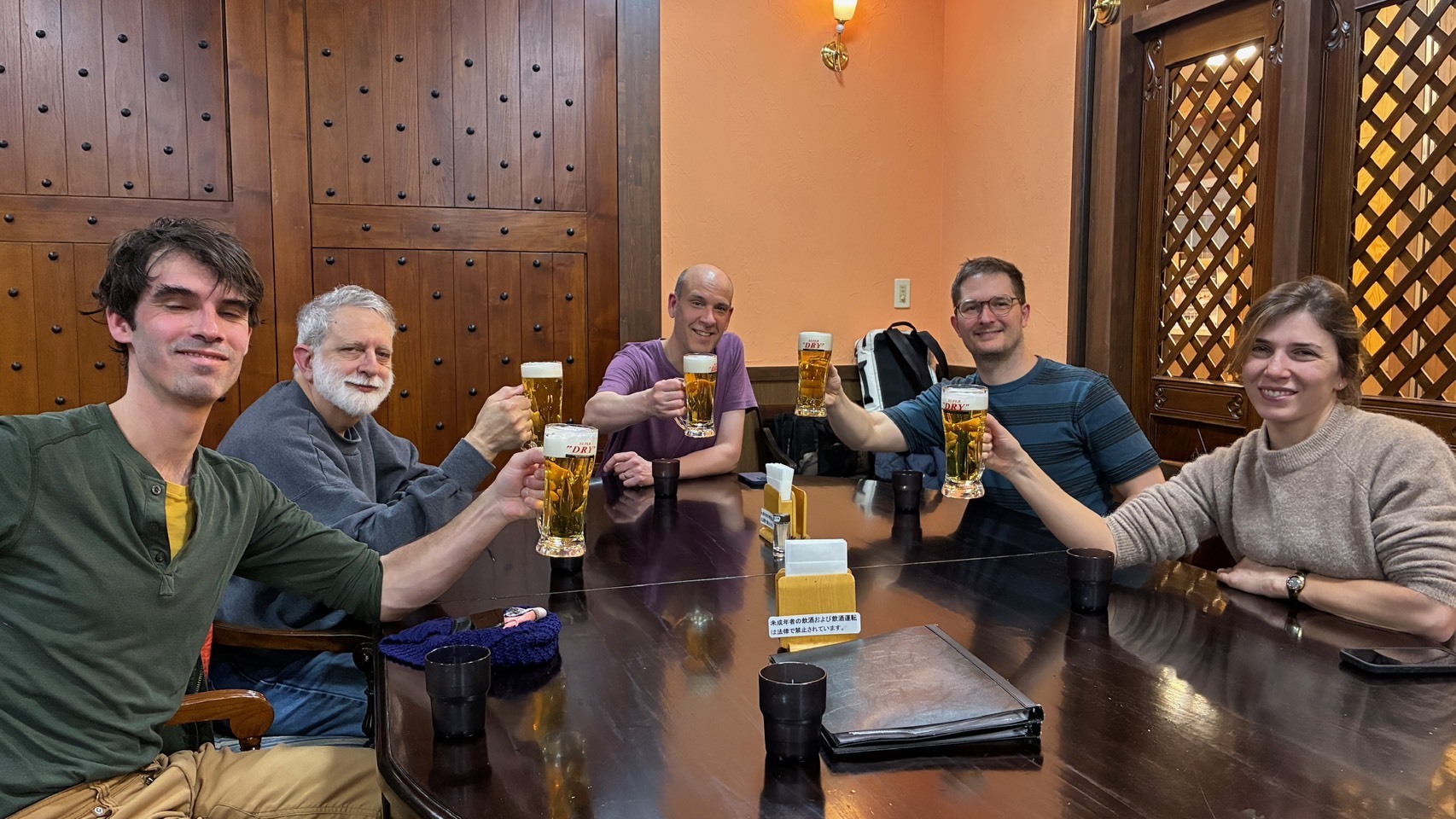
Further unwinding with a beer before dinner at the onsen (photo by Imai-san)
Saturday
It was time for everyone to go on their way back home. Michele had to leave a bit earlier and said his goodbyes the night before, but I was staying an extra night in Nagaoka so I accompanied everyone to the train station for goodbyes. I spent the late afternoon exploring the area around the train station and civic centre, and out of curiosity (and because I was admittedly getting a bit tired of rice) I walked to a nearby McDonald’s to see what a Big Mac was like in Japan. The answer: pretty much the same as back home, and about the same price too.
Other western chain brands I saw included KFC and, at least in Tokyo, 7-11 convenience stores. Apparently it is a big thing to have KFC on Christmas day in Japan!
Leave a Reply