
For my trip to Japan for the Oguni Washi intensive workshop, I opted to stay a few days in Tokyo beforehand. This gave me a better combination of travel time and airfare for the flights, and also gave me some time to adjust to the 13-hour time difference from home.
One nice surprise was the cost of things, in general. I’ve heard that Japan has a reputation of being an expensive place to travel, but I found that the costs for meals and local transportation were not much different than back home, and the hotels, at least the ones I stayed at, were cheaper than at home. It was very convenient that at the time, the Japanese Yen was worth almost exactly one Canadian cent, so converting prices in my head was trivial. Given the high standards for the transportation systems, it was actually much better value that at home.
The flight out
I had a direct flight from Toronto to Haneda Airport on Air Canada, flight number AC 1 (!). I also booked Air Canada’s bus service from the Waterloo Regional Airport to Toronto. At the time there seemed to be no additional cost for this, and it has the big advantage that it is considered a leg of the journey so it the bus were late (for instance, due to traffic) and I were to miss the flight to Haneda as a result, I would be re-booked on a later flight.
The flight was pretty much a great circle course (the equivalent to a straight line on a sphere), which took us over Great Slave Lake and Great Bear Lake in the Northwest Territories. I didn’t get good pictures of these through the window, but I did get a good shot of the Mackenzie River.
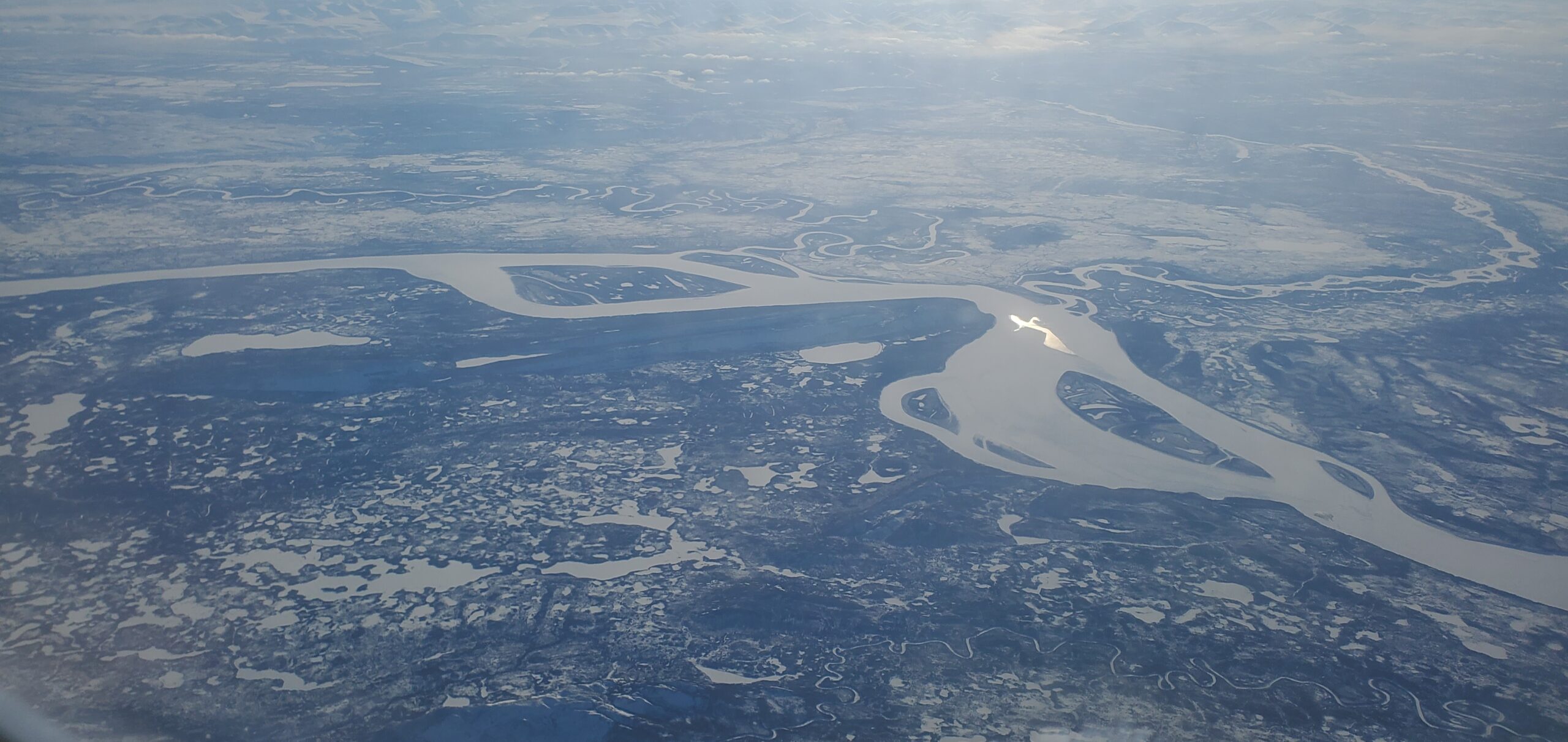
The Mackenzie River, about halfway between Normal Wells and Fort Good Hope
Only once over Alaska did we veer a bit more to the south and east to avoid some rough weather.
The entire flight we were chasing the setting sun, but crossed the international date line, so we landed pretty much the same local time as the local time of departure, but one day later.
Arrival and accommodations
My flight arrived at Haneda airport, and I took the Keikyu train (which seamlessly converts to the Asakusa line) from there to the Takaracho stop, which was within a block of my hotel, the Sotetsu Fresa Inn Tokyo Kyobashi. Many of the train systems seem to share both track and rolling stock, so I quickly learned never to rely on the appearance of the train to identify the line or route.
This was central Tokyo, so real estate is scarce, and this was true of the hotel room as well. The only place to open my suitcase was on the bed, but the bed was large enough I could leave the suitcase open there and still have room to sleep. The room rate included breakfast at the Sushi Japanese Bar Tokyobashi located on the ground floor which offered a 4-choice fixed breakfast menu. Although one of the choices was a western breakfast of sausage, eggs, etc. I opted for the Japanese breakfasts; one was the “Japanese Plate”, a somewhat traditional breakfast, the other was the “Omakase Seafood Bowl”, essentially sashimi on a bed of rice. A fourth choice was a vegetarian salad with bread.
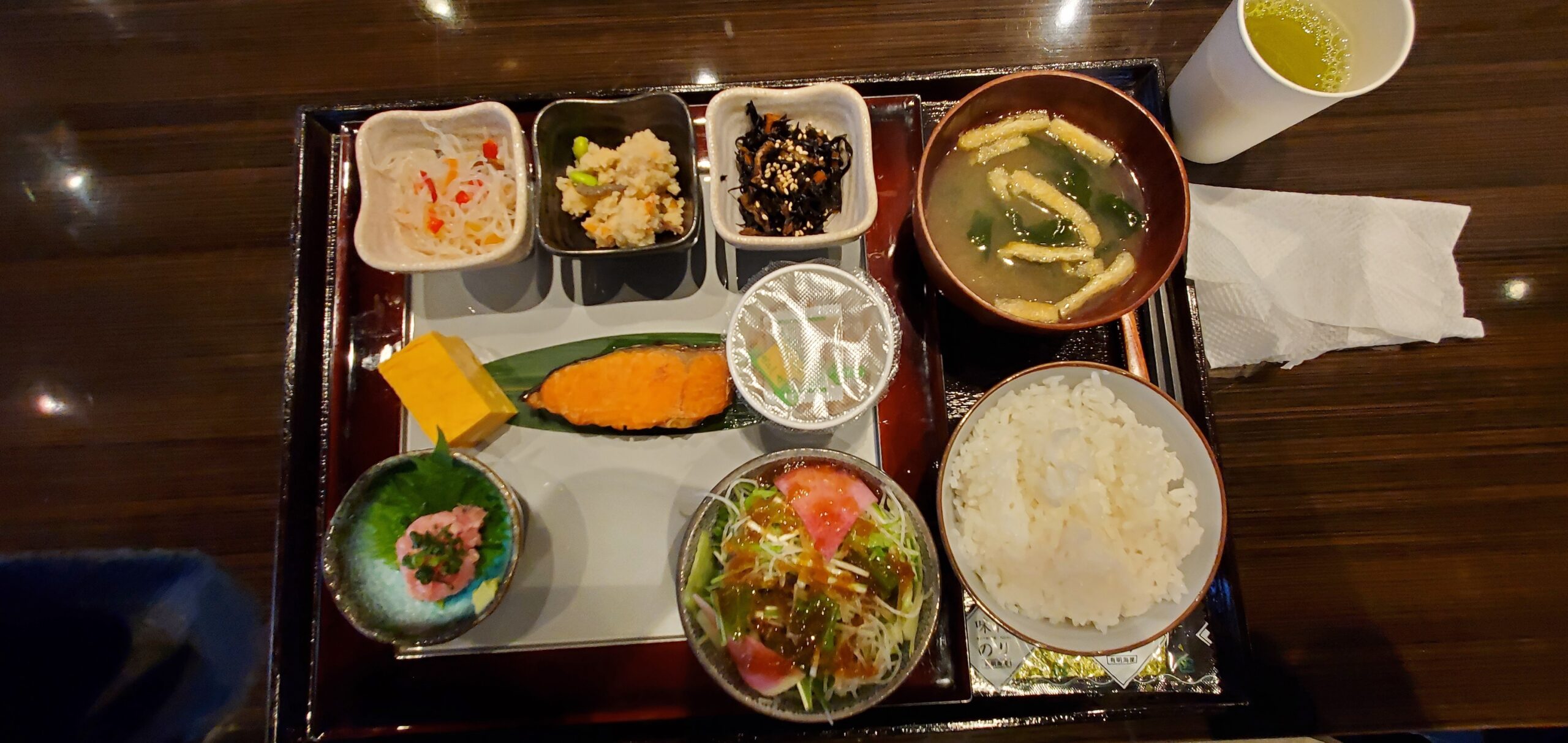
Japanese Plate. The little cup in the middle contains natto, a fermented soybean product.
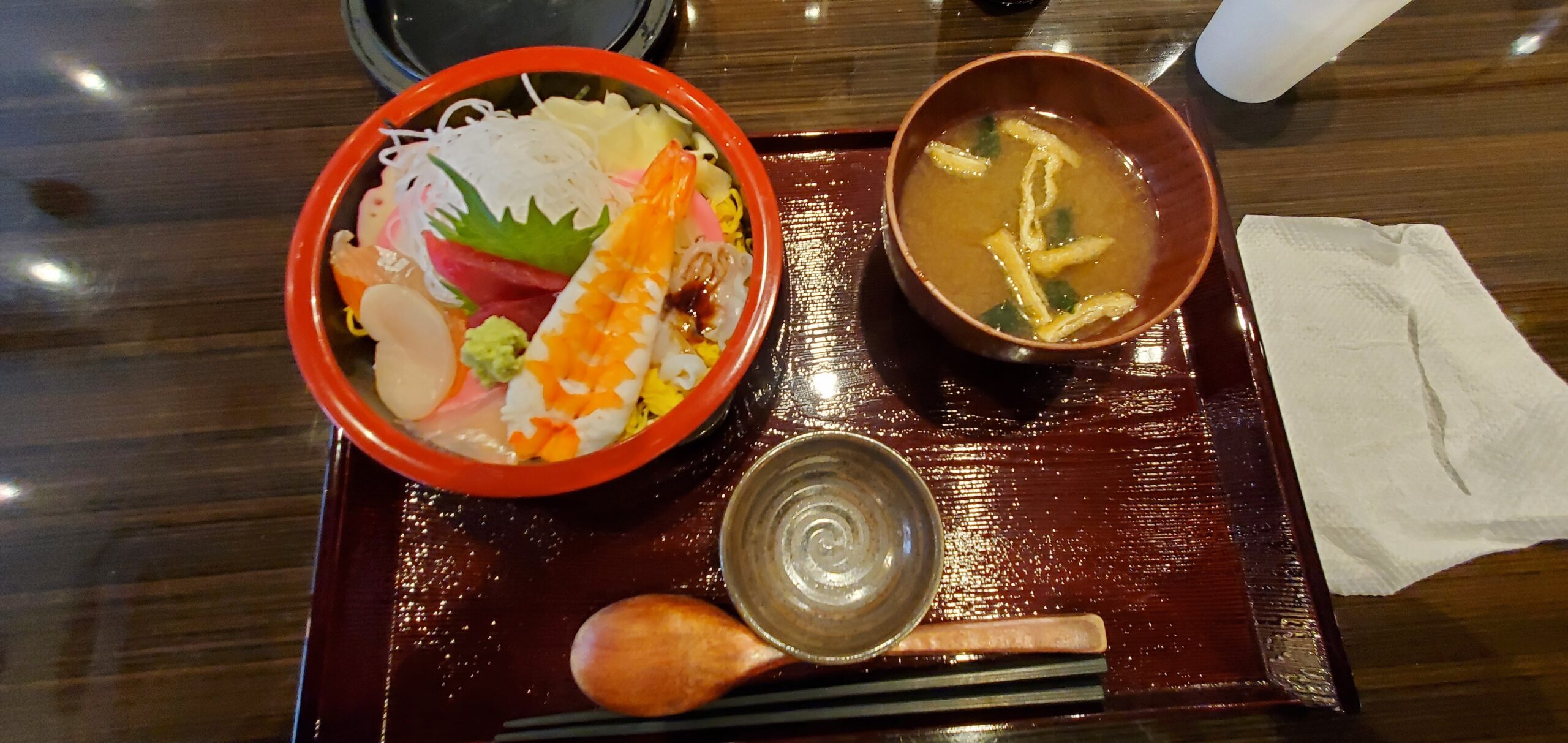
Omakase Seafood Bowl
The natto was a new experience for me. I found that I liked the flavour, and the texture in my mouth was fine, but the slimy coating from the fermentation process made it very challenging to get the stuff from the bowl to my mouth in any neat manner. Having a beard did not help. There is clearly an acquired knack to picking up a bit of the stuff and giving it a spin around the rim of the bowl to break off the threads of slime that stretch from the bowl to the chopsticks!
Tokyo Train station
My first “sightseeing” task was to figure out the layout of the nearby Tokyo central train station, to be sure that I could catch my Shinkansen train to Nagaoka without having to arrive at the station too early. The station is almost split in two by a central area that you can only enter with a paid train fare. At street level, there is a somewhat unobvious passage at the north end of the station connecting the old red-brick station building (on the western Marunouchi side) to the more modern entrances (on the eastern Yaesu side), and each of these sides has fare turnstiles into the central fare-paid area. This area gets you the the platforms for most trains, but if you are taking the Shinkansen you must pass a second set of turnstiles to reach its special platform.
Both sides of the station are packed with shops, and there is (at least) one basement level with more shops and restaurants. There is an entire “Ramen Street“, and also “Tokyo Character Street” lined with shops selling licensed merch. Underground also connects to nearby buildings, stores, and subway stations.
One thing I noticed was that, other than in restaurants and toilets, there is absolutely no place to sit down in and around the station. I suppose they don’t want people lingering as it is busy enough as it is.
Getting around Tokyo
I purchased a 3-day Tokyo Metro (subway) pass to get around town and that proved very convenient. The trains run very frequently but the nine lines form a complex network so Google Maps was invaluable for trip planning. Some of the stations seem insanely complicated (for instance, see the diagram of Otemachi station, which services five subway lines) but all the lines are identified by colour and letter (mnemonic of the romanized name of the line) and all stations are clearly numbered. On the trains digital displays show the diagram of the line with current and next stops, connections at the next stop, and a diagram of the platform so you know which way to turn to make your next connection or reach the correct station exit. These signs (as well as audio announcements) are both in Japanese and English. Signs on the platforms give recommendations on which car to board to make the next connection more smoothly.
Most of my trips started and ended at the Kyobashi station (G-10 on the yellow Ginza line), a block from my hotel. This station has nine exits, and at least once I took the wrong exit (7 instead of 6) and was completely disoriented trying to find my hotel even though I was less than a block away.
Whether it is worthwhile taking the subway for just one stop often depends on which end of either station you are at or want to get to, since, at least downtown, the walking distance between the nearest exits of adjacent stations is about the same as the walking distance from one end to the other in any single station. I had good weather so I suppose that on cold or rainy days, the one-stop trip might be more worthwhile.
Museum of Printing
My longest subway trip was my visit to the Printing Museum, located at the base of the Toppan Building, an office tower that is home to the large printing and graphic media company of the same name.
This museum includes a letterpress workshop, but either taking the workshop or touring the room requires advance booking, and this was all filled by the time I was planning things. You can, however, see inside the workshop through windows, and some equipment on display includes a Benton engraver, some sort of pivotal type caster, and an Albion printing press.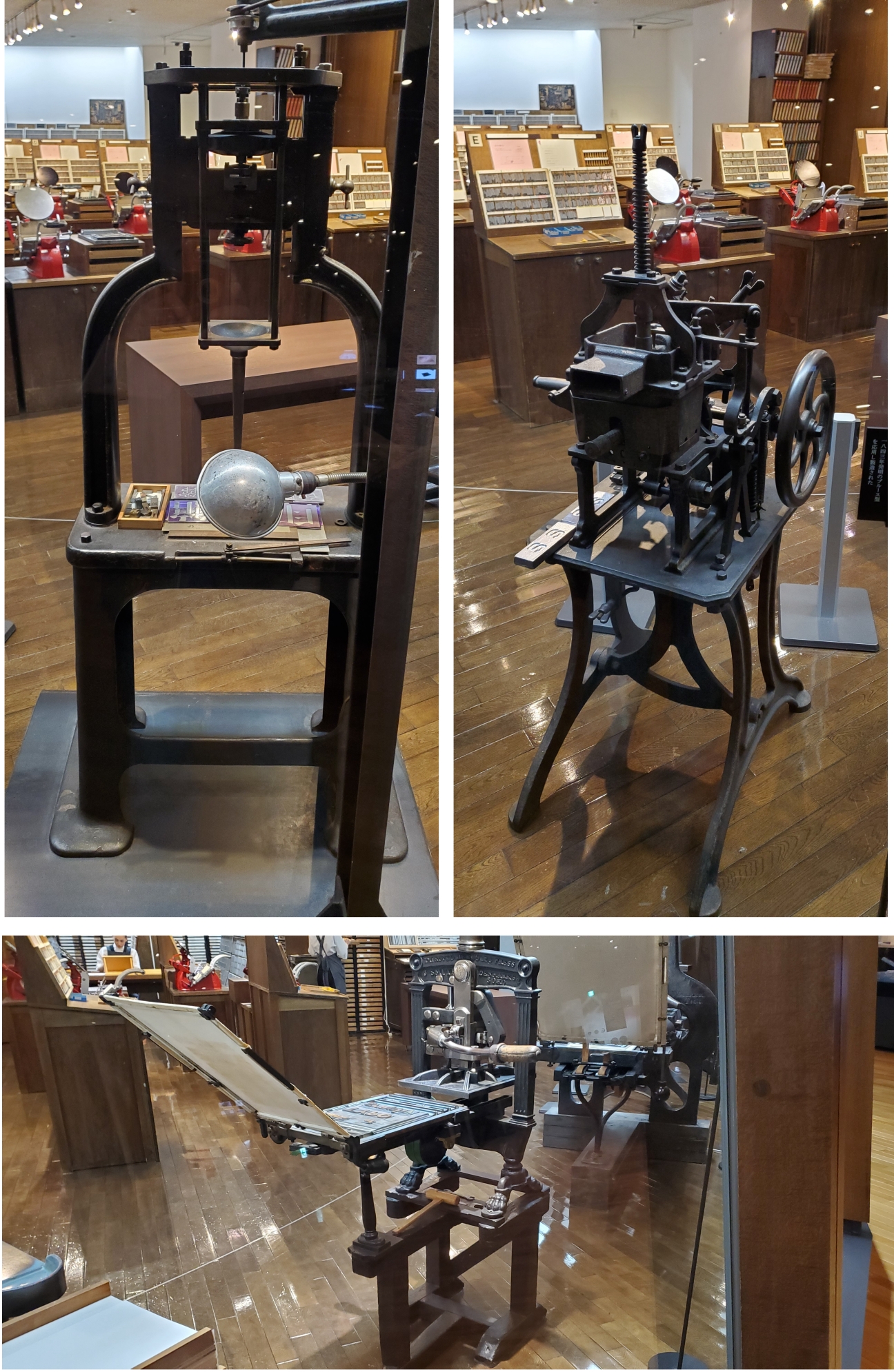
For workshop purposes, the room contains perhaps a dozen printing stations, each with a case of Japanese type and an Adana press.
One other display showed the steps in the making of the famous “Wave” print, more formally “The Great Wave of Kanagawa“. The display include eight printing blocks (reproductions, I’m pretty sure), proofs of each block in its colour, and also proofs showing the cumulative image as each block is printed, all finishing with a reproduction of the final print.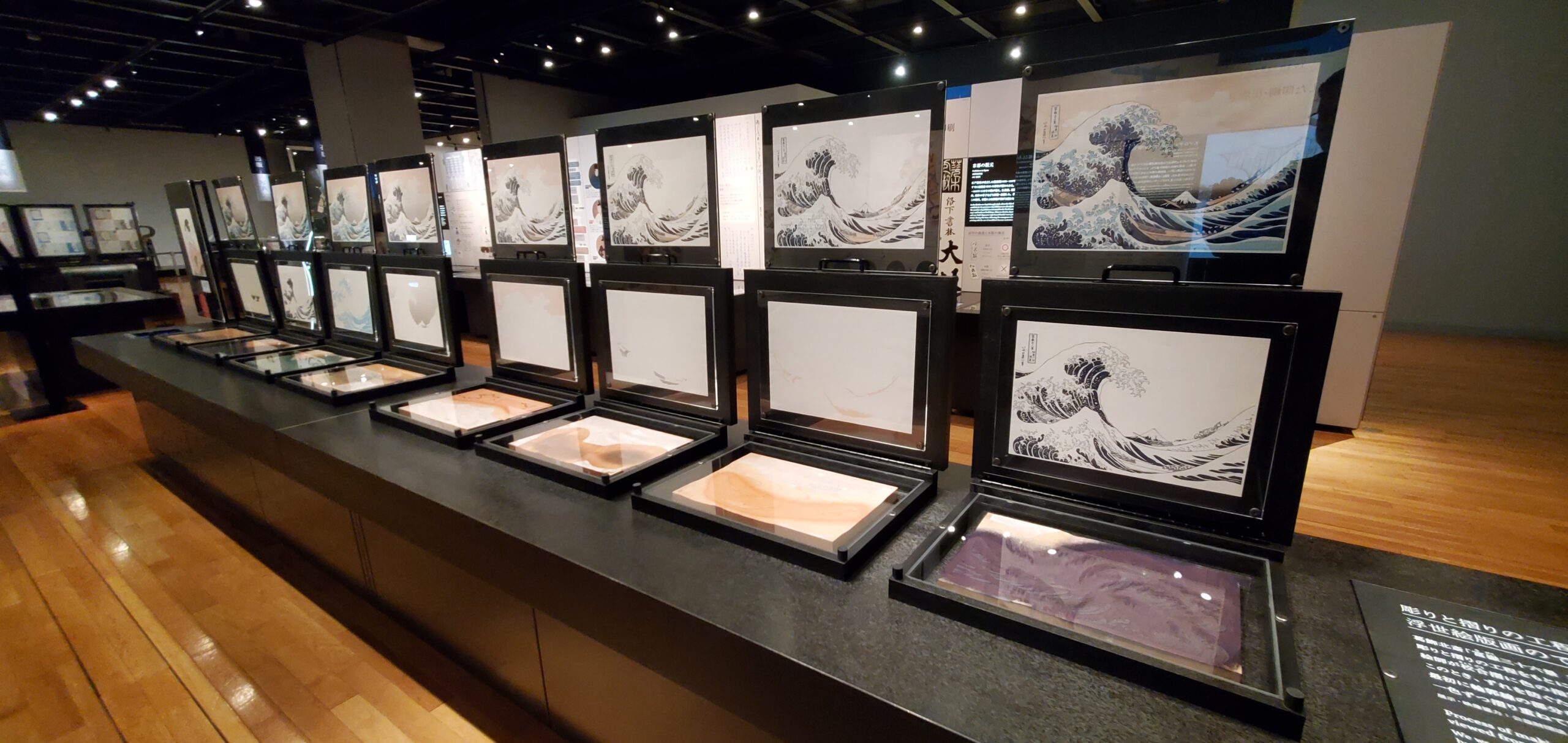
Much of the hall shows a history of printing technology in general, and one wall chronicles the history of typeface design and its relationship to printing technology advances.
Most of the displays are in Japanese and English, and I used Google Lens to translate some of the Japanese-only signs.
Imperial Palace
On day I took a guided a tour of the Imperial Palace grounds, lasting about an hour. Although I could have easily walked there, I took the subway to the nearby Otemachi station so I would be on time for the early tour group. I had actually walked to the area of the palace the day before and taken a little walk in the outer gardens, but this day was an official tour of the inner grounds. You can book these ahead but you can also just show up and wait in line. They took groups of about 200 people at a time, but the tours are offered in 6 languages (Japanese, English, Spanish, French, and two others I forget) so I chose the French tour. This was nice because our own group was only about 8 people, including the guide.
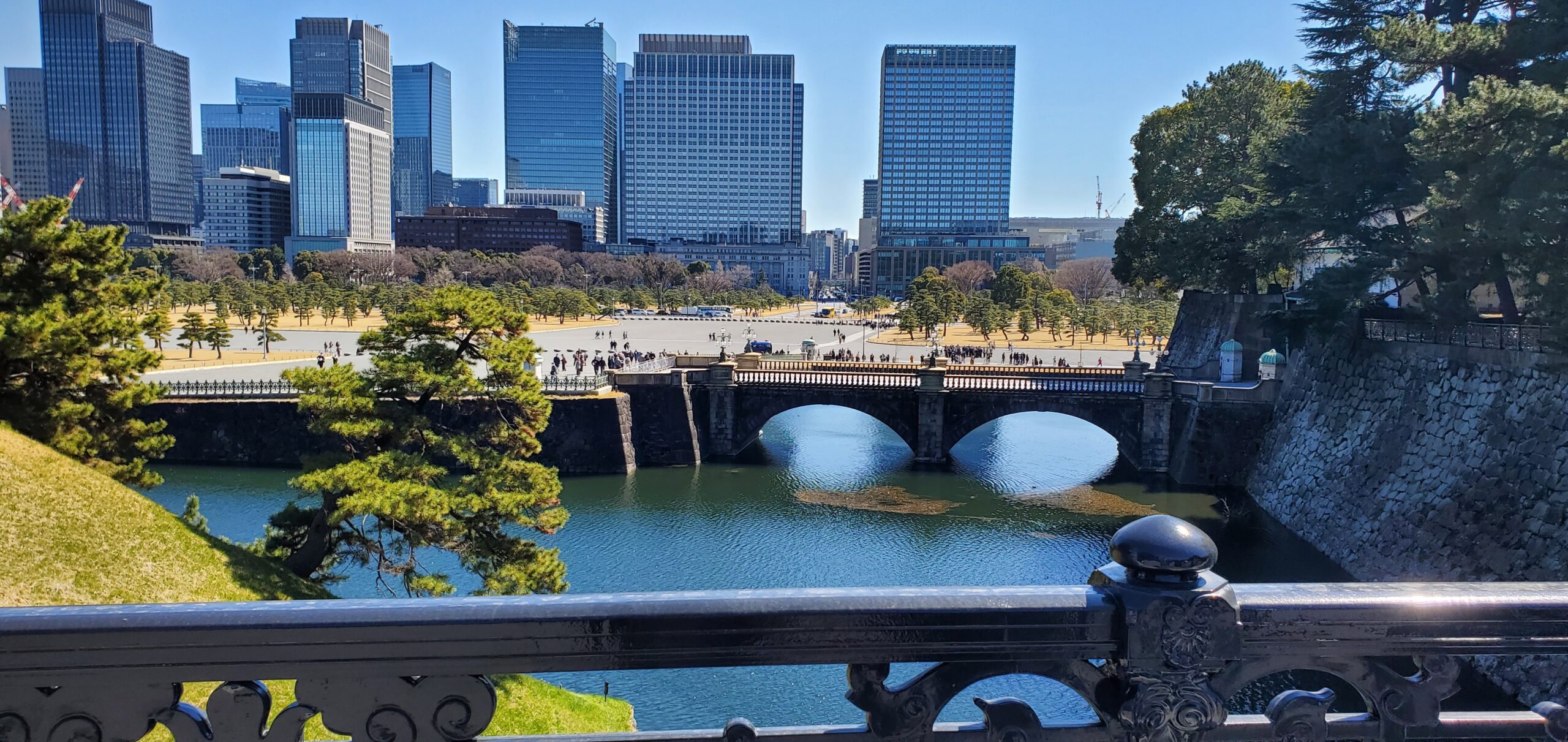
The Ishibashi bridge, seen from the Tetsubashi Bridge, both part of the ceremonial palace entrance route.
After the formal tour I walked to Kitanomaru Garden, not actually part of the Palace but just to the north and ate lunch at a cafe there. That garden includes a Science and Technology museum, but looking online seemed to indicate that it is mostly kid-oriented, so I returned to the East Garden of the palace for a self-directed walk. The East Garden features several botanical collections including orchards, an iris garden, and a bamboo garden.
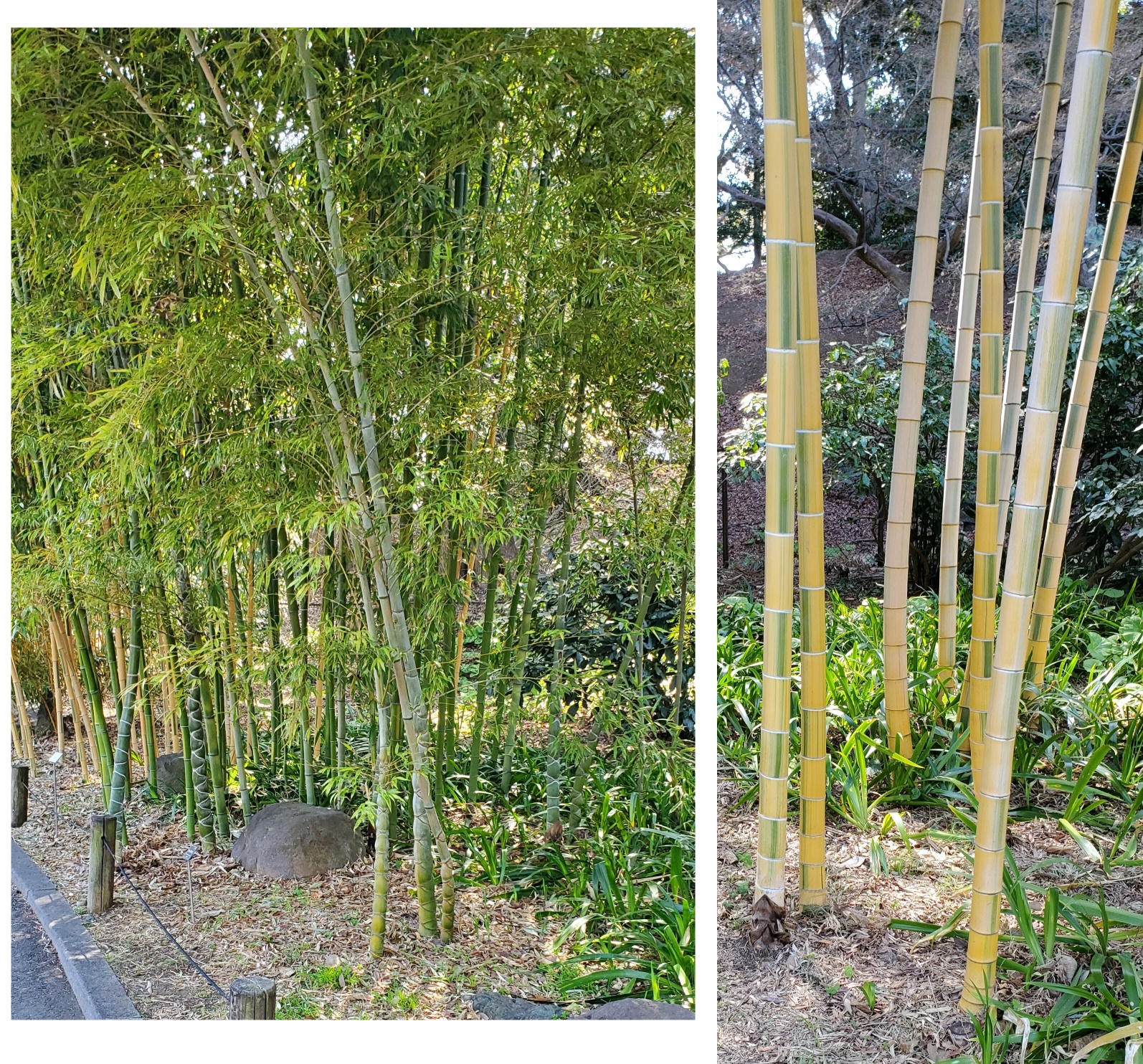
Some views of the bamboo garden. Note how there can be a pattern of alternating segments between the nodes.
Old Shimbashi Station Railway History Exhibition Hall
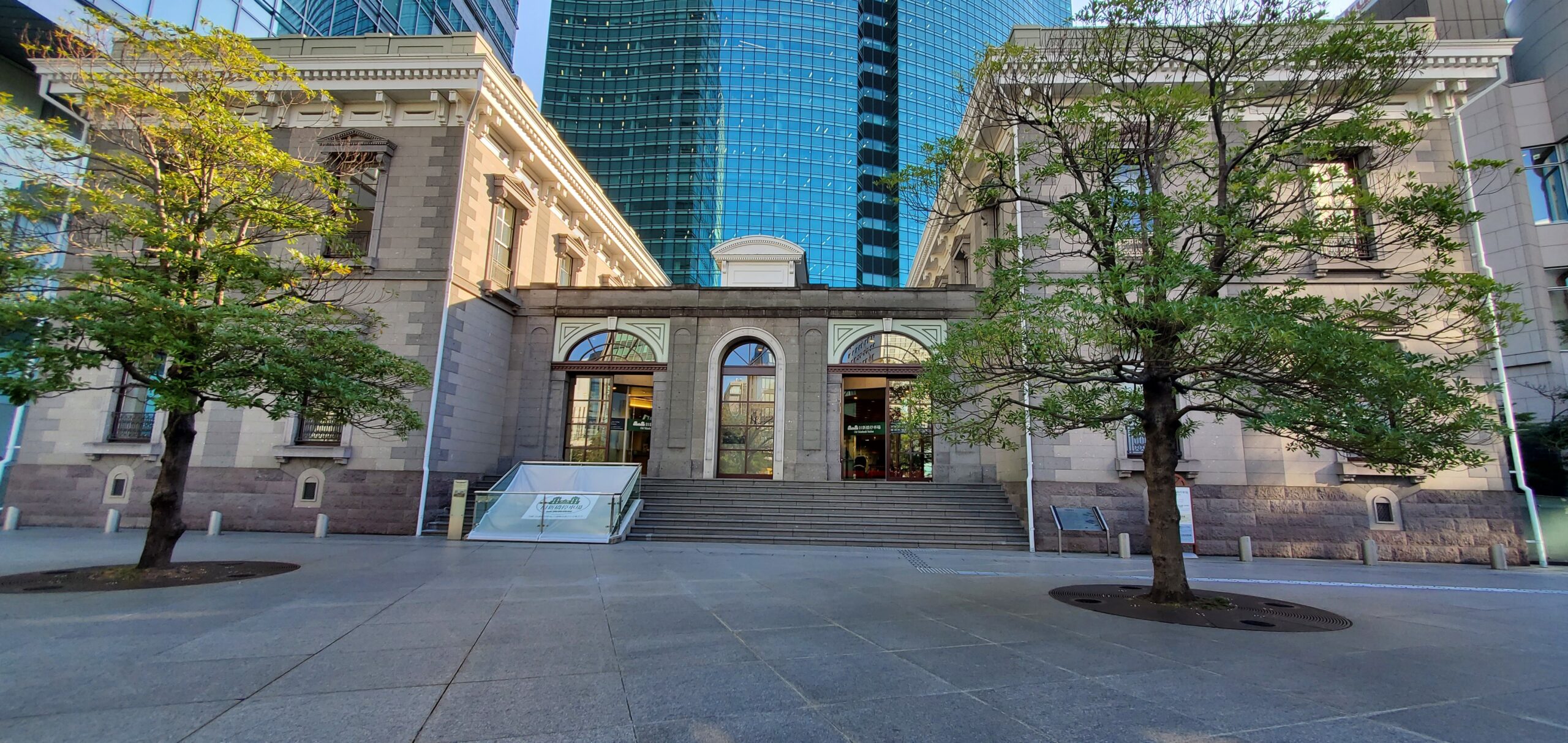 When Japan first opened up to foreign, especially Western, trade during the Meiji restoration, one of the first things they did was set up railroads. The first line ran south from the Shimbashi Station in Tokyo to Yokohama. Shimbashi Station was destroyed in a 1923 earthquake, and passenger service now uses a nearby station of the same name, but a replica of the old station building has been rebuilt on its original location as a historic site. In certain parts of the building, glass panels show the original building foundations.
It contains a permanent exhibit of some early railroad and station history in one of the wings, along with a gift shop. Unfortunately, most of the display had only Japanese signage, and phones and cameras were not allowed, so Google Lens was out as a translation tool.
The rest of the building is general-purpose exhibit halls; one contained a collection of recent award-winning books from around the world, and in another area was the Oi Ocha Museum of Tea, a kids-friendly exhibit from a popular brand of green-tea-based beverages. The book display was for winners of book-design awards, including the Alcuin Society Awards for Excellence in Book Design in Canada.
Behind the station, alongside the platform, they have the mile zero marker post and a short run of the style of track used at that time.
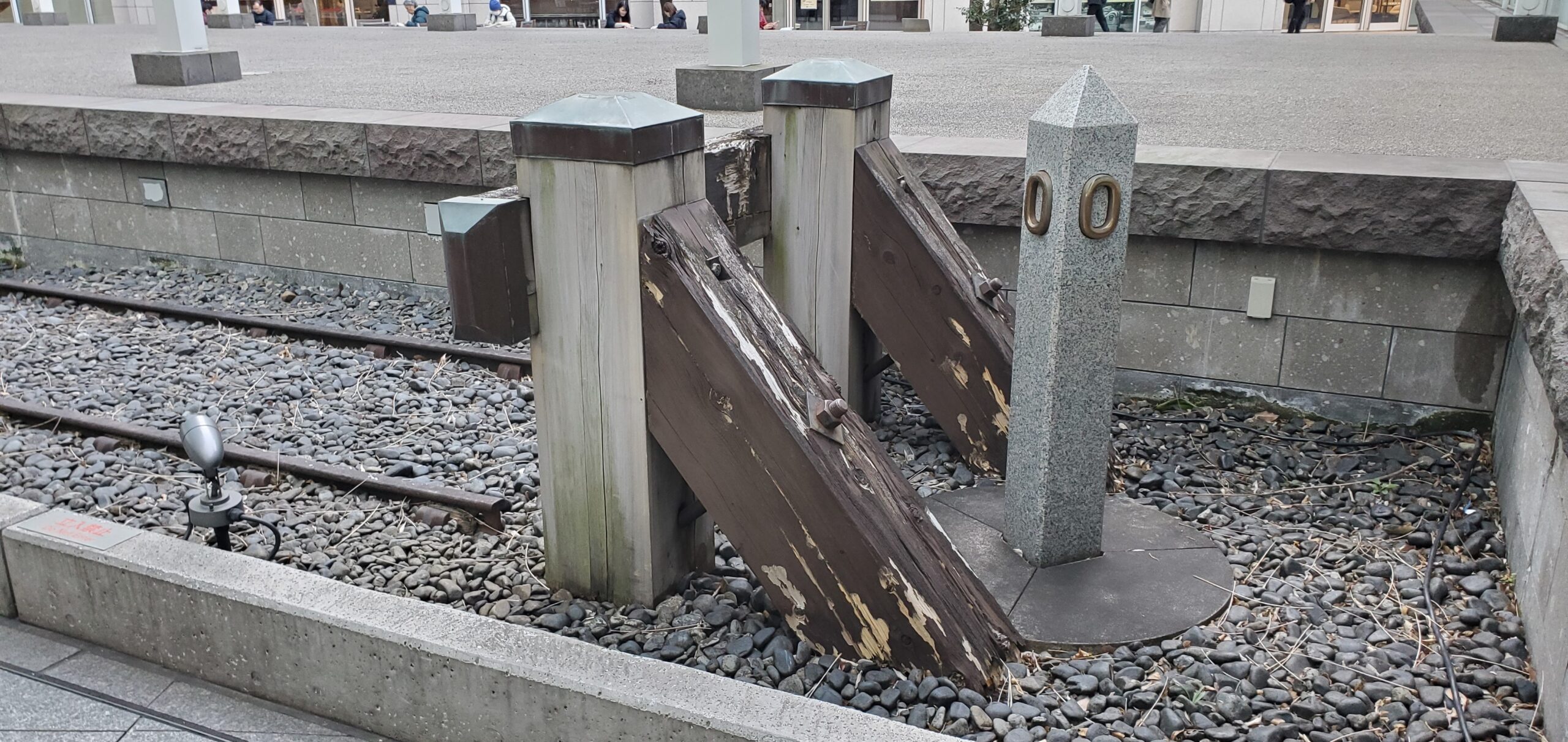
Unlike modern rails, these have a dumb-bell cross-section and sit on special saddles on each tie. You can just barely see in this photo the hardwood blocks used to pin the rails into the saddle plates.
Nihonbashi Bridge
On the day I had to board the Shinkansen to Nagaoka, I had a couple of hours to spare, so I just walked north from my hotel. On this otherwise quiet Sunday morning, they seemed to be filming a car commercial along the street as I saw several cars drive by trailed closely by another car with a remote-control boom camera aimed at it, with private security staff every block keeping an eye on things.
In a few minutes I had reached one of the canals that form part of the old defensive network built around the palace area during the Edo period. The canal is almost completely roofed over by an elevated expressway on tall columns. The bridge that took my street across the canal turned out to have some history, though.
This is the Nihonbashi bridge, which was built in 1603 by the Shogunate in Edo times and designated as being the starting point of the five major roads in Japan. The bridge had been re-built in Renaissance style in 1911, with an ornate marker in the middle celebrating its status as the terminus of all the roads. The marker has since been moved to a small square next to the bridge, along with other associated plaques and signage.
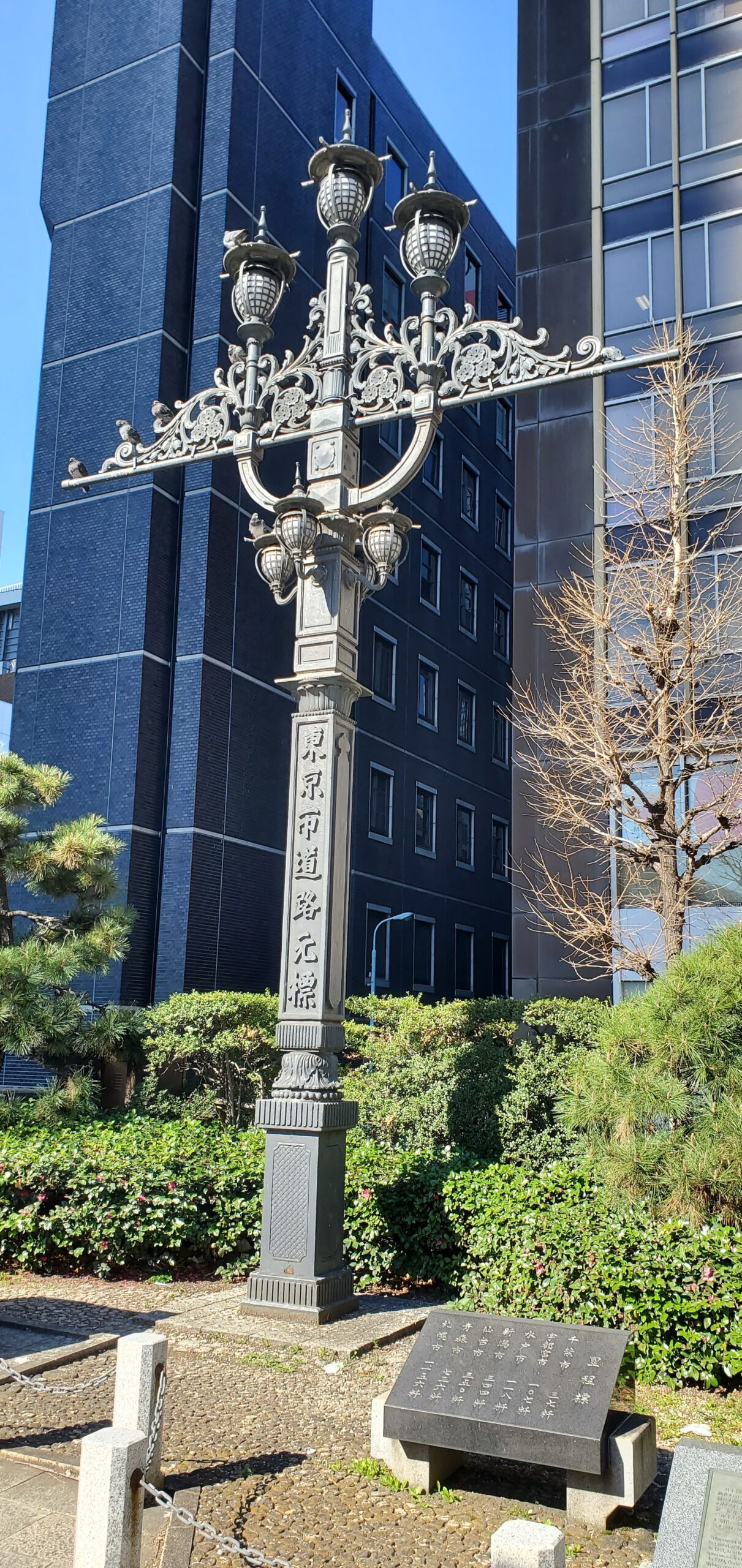
The mile zero marker
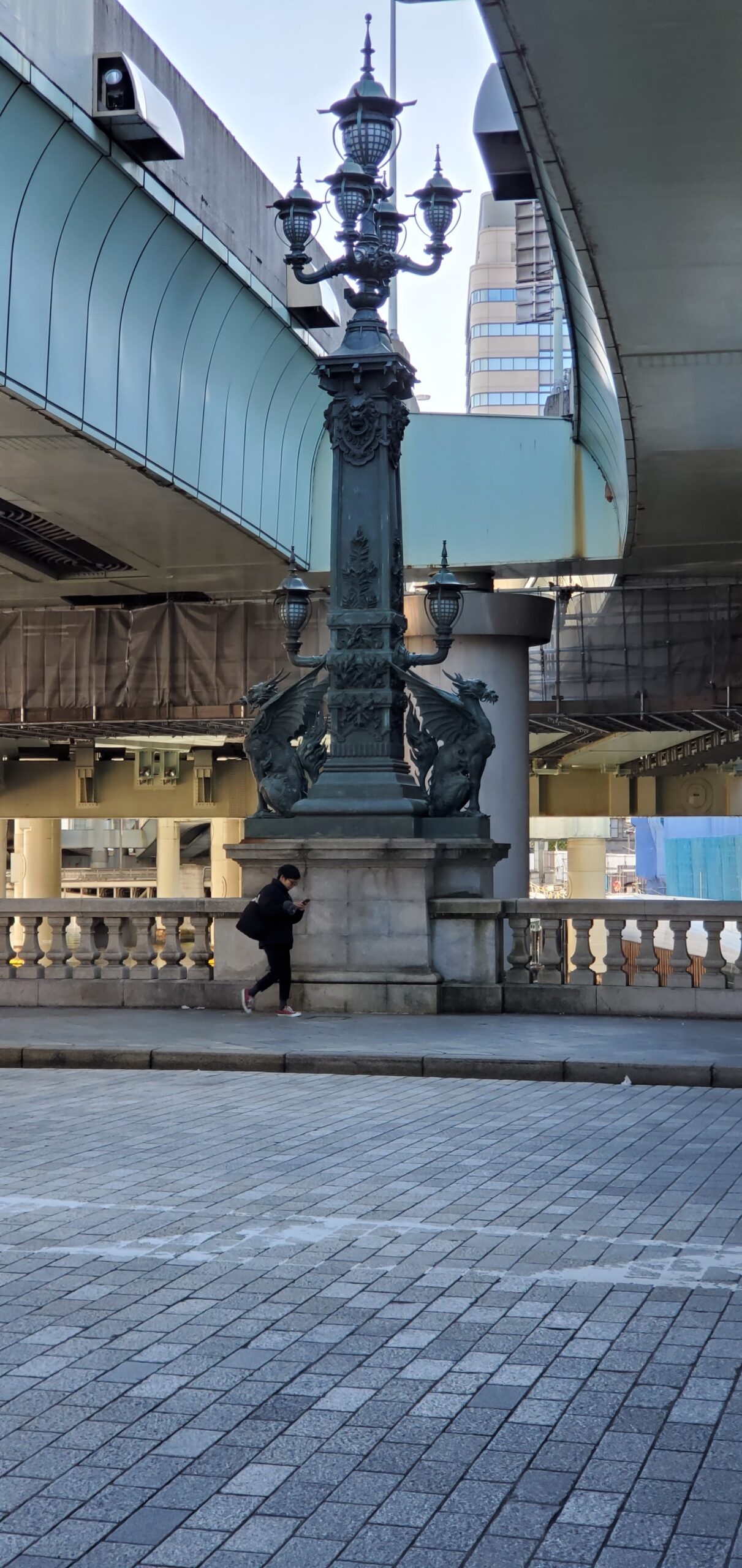
One of the lamp standards along the side of the bridge, with the elevated expressway as a back drop
Off to Nagaoka
On Sunday it was time to head to Nagaoka to join the rest of the workshop group. I had already booked and paid for my Shinkansen (often called the Bullet Train in Western culture) fare online. During my many visits to the train station in previous days, I stopped at one of the many ticket machines to get my actual tickets. I had a bit of trouble getting my return-trip tickets at the time, and this turns out to be because the QR code for my booking was rendered at an unfortunate resolution which gave the QR-pixels a staccato spacing. Some of the QR-code pixels were 4 image pixels wide and others were 3 image pixels wide. That and the anti-aliasing made the code hard to read, but I got myself an improved QR code later to get the tickets. The booking also includes a 17-digit reservation code which I could have used instead.
In the train station, there are (at least) three separate types of fare machines, all looking generally the same. These are for the Tokyo Metro, the Shinkansen trains, and all the other trains in the Japan Rail network. I of course had to be using the correct machine to get my tickets.
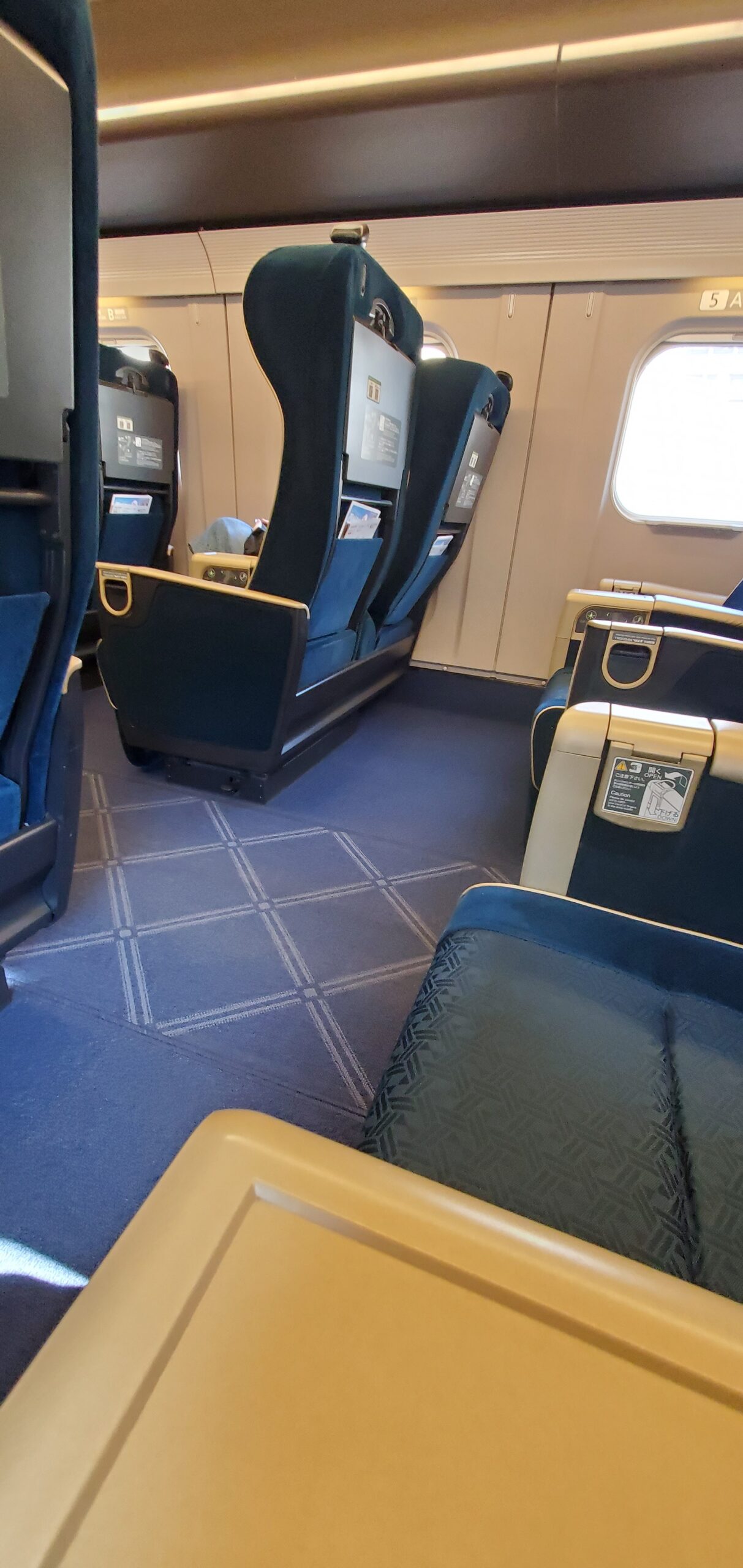
Green Car seating. The train was not busy so I had the entire row to myself
I had booked seating in the Green Car service, which featured wider seats with more front-to-back spacing as well, for about a 50% fare premium. I mainly did this to get a reserved seat (not available on the regular cars) but the extra space was much appreciated. It turns out that there is usually plenty of room on the trains and reserved seating is not really needed, but in trip planning I wanted to avoid any missed-train anxiety. The only train that would have been time-critical was my return trip to eventually board my flight at the airport.
The other advantage of a booked seat was to ensure a window seat, but that proved less useful than I had thought. Although the Tokyo area is itself very flat, once about halfway along the trip the train spent most of its time in tunnels through the mountains. Not just a few tunnels—the train would literally leave one station, enter a tunnel, and remain in that tunnel until the next station perhaps 15 or 20km down the line!
I had one moment of confusion trying to pass the turnstiles at the train station. My Shinkansen ticket was in two parts, one for the basic fare and reservation, and one for the Green Car premium. To pass the turnstile it turns out you have to insert both these tickets, either together or in quick succession.
On exiting the train (and also on the Metro) you scan your pass or ticket again to ensure you’re leaving at the destination you paid for. Unexpired passes are returned but tickets no longer of use are eaten by the turnstile—no souvenir tickets! Returning to Tokyo after the workshop, the inner Shinkansen turnstile kept one of the tickets and the outer turnstile kept the second one. If you get off your train at a different stop, for whatever reason, there are fare-adjustment machines where you can pay the extra fare for the extra travel so the turnstile will let you exit. I don’t know if you can get a refund if you get off early.
Leave a Reply